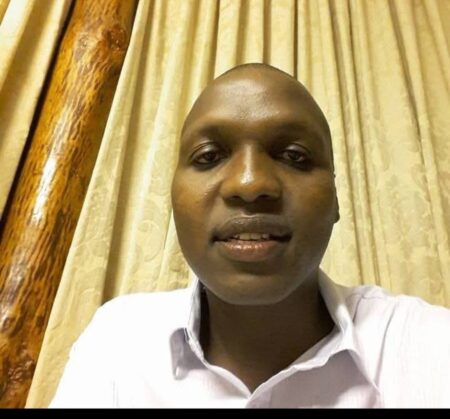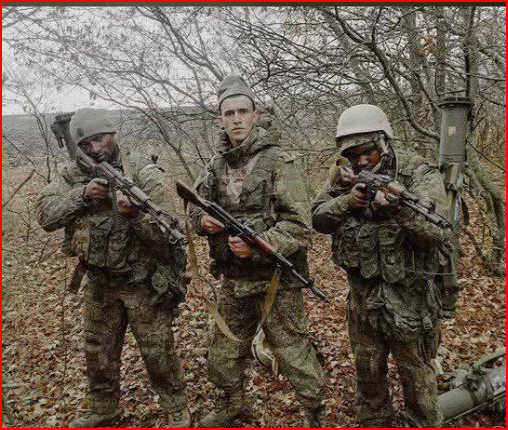
They Nicknamed him Deno-Spotter
When Dennis Ombwori Bagaka, known to those around him as Deno, was brought into Nairobi West Prison in 2019, he was facing a court martial case.
Within the tightly controlled routines of the prison, where personal histories are quickly stripped away, Deno retained the posture and alertness of someone shaped by military discipline.
He remained at the facility for two more years and quietly completed his sentence in early 2024.
After his release, Dennis struggled to re establish himself.
He took up short term work as a security guard, rotating through nightclubs in Nakuru and Ruaka.
The work was unpredictable and poorly paid, offering little sense of direction or long term security.
During this period, he stayed in contact with former inmates and acquaintances, maintaining conversations through WhatsApp even as some of them were still serving their sentences.
On 16 July, Dennis made a call while in Kigali, where he was transiting on his way to the United Arab Emirates.
He explained that he had decided to pursue an opportunity in Russia, describing Dubai as only a temporary stop before continuing his journey.
He sounded resolved and confident, assuring those he spoke to that he would call again once he arrived.
He did. From Russia, Dennis spoke with renewed optimism. He described what he believed to be steady pay, structured contracts, and a future that extended beyond the battlefield.
He spoke of finishing a year of service and being given choices to continue, to study, or to begin the process of acquiring Russian citizenship.
In his telling, the risk appeared calculated and the reward tangible.
He encouraged others to consider following the same path.
As these conversations continued, questions began to surface.
When pressed for more detail, Dennis shared contacts linked to the recruitment process.
One was a Russian woman. The other was a Kenyan man named Musyoka.
Both were contacted shortly before reports began circulating of Kenyan nationals becoming entangled in recruitment pipelines connected to Russia’s war in Ukraine, with some facing arrest or disappearing from communication altogether.
Information about these recruitment links was quietly passed to a senior editor at a major Kenyan media house, with the hope that it would be developed into a serious investigative piece. No response followed.
The material was set aside, archived while awaiting clearer evidence and safer conditions to pursue the story independently.
Later, Dennis confirmed that he had been deployed to Donetsk, a region heavily affected by fighting in eastern Ukraine.
Another Kenyan former serviceman, who had also passed through Nairobi West Prison, remained in St Petersburg, waiting for deployment.
The two had not seen each other since arriving in Russia.
In September, Kenyan authorities began cracking down on suspected recruiters and facilitators linked to the conflict.
Around the same time, communication with Dennis abruptly stopped.
His phone went silent. So did that of the other Kenyan.
Recently, information emerged that Dennis Ombwori Bagaka had been killed while serving in Russia.
No formal announcement accompanied the news. His body has not been returned home, and the precise circumstances of his death remain unknown.
The whereabouts of the other Kenyan have still not been established.
Dennis’s journey, from incarceration to unstable civilian work and ultimately to a distant battlefield, reflects a broader and largely unseen pattern.
It is a story shaped by limited options, informal recruitment networks, and the powerful pull of promised stability in a world that offers few clear paths forward.
Read More:
Panic as a Pastor’s 17-Year-Old Daughter Disappears Mysteriously(Photos)