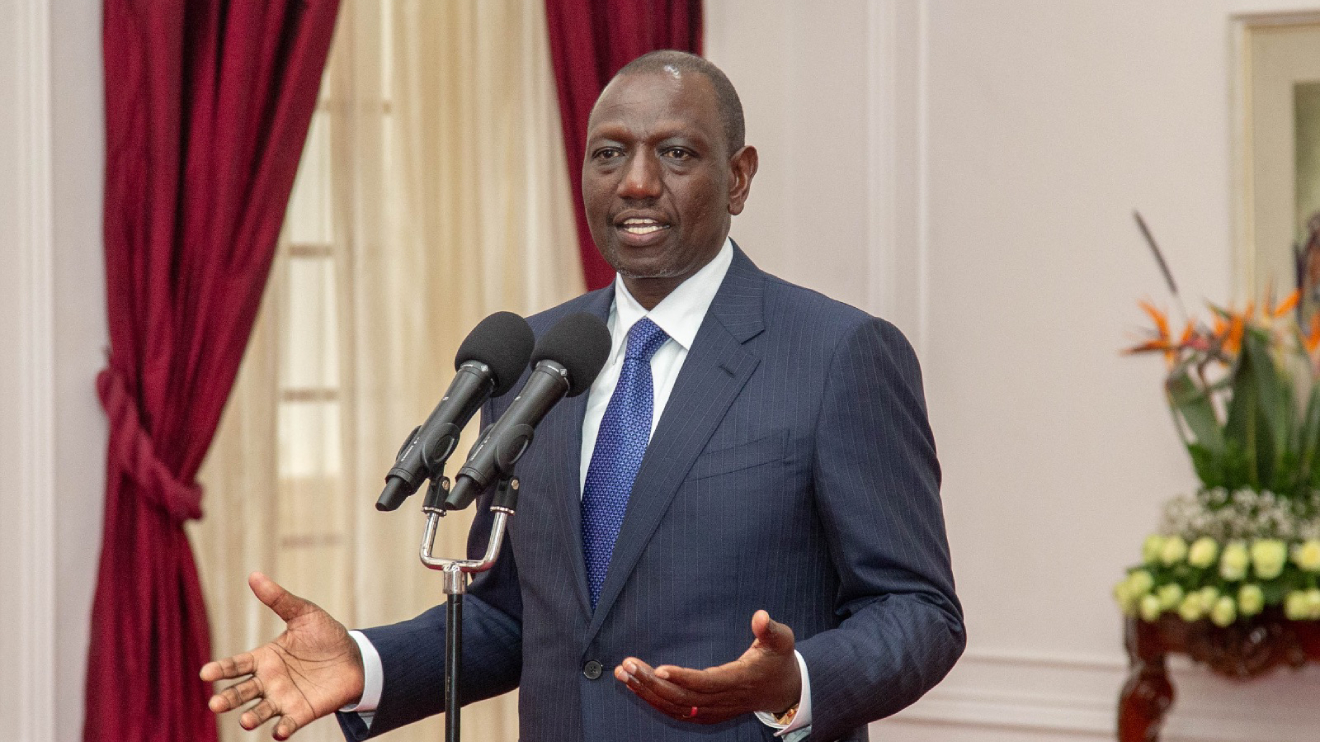
President William Ruto has warned young Kenyans and opposition leaders who are planning to demonstrate next Tuesday over rising fuel prices in the country.
In a statement issued by the National Police Service, authorities cautioned against the planned protests in the Central Business District, warning that any demonstrations deemed unlawful or disruptive will be met with a firm response.
Organisers have threatened a “total shutdown” of the CBD to pressure the government into addressing the fuel crisis.
Speaking on Friday, Nairobi Regional Police Commander Issa Mohammud acknowledged that the Constitution guarantees the right to assemble and demonstrate but stressed that this right must be exercised within the confines of the law. He warned that authorities would not tolerate actions that infringe on the rights of other citizens or disrupt economic activity.
“That’s not allowed. We will deal with you. Others will obstruct the road and cause inconvenience to other citizens. You have a right, and the other citizen has a right. While the right to assemble is protected, it is not absolute,” he said.
Article 37 of the Constitution provides every person with the right to assemble, demonstrate, picket, and present petitions to public authorities, provided it is done peacefully and without arms. The provision forms part of the Bill of Rights and is intended to safeguard collective expression.
Mohammud, however, emphasised that the right must be exercised responsibly. “It is not absolute — let us be clear on that. It must be exercised with due regard to the rights and freedoms of other Kenyans and visitors,” he added.
The police commander noted that past demonstrations have, in some instances, escalated into violence, resulting in the destruction of property and disruption of essential services, and warned that such actions would not be tolerated. “Such actions are unlawful, and the police will act according to the law,” he said.
The protests were sparked after the Energy and Petroleum Regulatory Authority (EPRA) announced significant fuel price increases for the April–May cycle earlier this week, with petrol rising by Sh28.69 and diesel by Sh40.30 per litre.
A day later, the regulator revised prices downward following a reduction in VAT from 13 per cent to 8 per cent. In Nairobi, super petrol dropped by Sh9.37 to Sh197.60 per litre, while diesel fell by Sh10.21 to Sh196.63. Kerosene prices remained unchanged at Sh152.78 per litre.
The revised prices took effect on April 16 and will remain in place until May 14, 2026. The adjustment came after an earlier spike pushed Nairobi fuel prices to record highs, with super petrol reaching Sh206.97 and diesel Sh206.84 per litre.
The VAT reduction is widely seen as part of government efforts to cushion consumers from global fuel price pressures. Despite the intervention, concerns over the rising cost of living persist, with political actors continuing to call for additional relief measures.
READ MORE:
Kenya Has the Highest Fuel Prices in East Africa — And Kenyans Are Saying Enough Is Enough!!
Natembeya Issues Statement Over Massive Fuel Hike in Kenya
Gachagua Was Always Admiring My Body Physique Instead of Working-Ruto’s PS Reveals in a Video