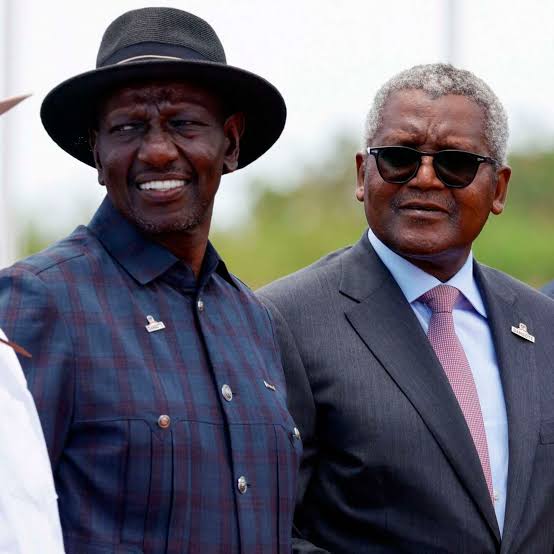
Africa’s richest man, Aliko Dangote, has confirmed that he bought a quarter of Kenya Pipeline Company (KPC), settling the question of who stood behind one of the biggest block trades on the Nairobi bourse this year.
“We bought 25% of their pipeline network for the distribution of petroleum products,” the Dangote Industries founder said at an event in London on Wednesday, without saying which of his companies made the purchase.
The deal
The stake follows a block trade of 4.5 billion KPC shares valued at 42.5 billion Kenyan shillings ($327.4 million). Business Daily puts the holding at 24.76 percent, bought from top parastatals. That level sits just below the 25 percent line that would have required Capital Markets Authority approval.
KPC was wholly state-owned until the government sold 65 percent of its shares in an IPO earlier this year, and its market capitalisation stands at 163.9 billion shillings. About 13 parastatals put Sh64.23 billion into the IPO for a 38.35 percent stake, with pension funds for Kenya Power, KPC and Kenya Ports Authority workers participating heavily.
The strategy
The purchase fits a wider Kenyan footprint. Kenya broke ground on September 30 on the Dangote-backed refinery in Lamu, designed to process 700,000 barrels of crude a day, and Dangote Group has offered East African governments a combined 30 percent stake in it. A stake in the pipeline that carries fuel inland from Mombasa gives him a route to market for the refinery’s output. The refinery is due for completion in 2030, with shares to be listed on the Nairobi bourse.
The questions that remain
President William Ruto reportedly welcomed the deal as a sign of confidence in Kenya’s capital markets. Critics are asking harder questions. Ndindi Nyoro, suspended from Parliament over his KPC claims, has alleged that public pension funds were pushed into the IPO and then sold at a loss to a buyer linked to the President.
Dangote’s statement identifies the buyer as Dangote, but the allegations about the President’s interests remain unproven, and Nyoro has not published documents supporting them.
Several questions are still open: the exact price per share the sellers received, which Dangote entity holds the stake, and why the trade was kept under the regulatory threshold. The NSSF, the Treasury and the CMA can answer them with a full disclosure of the terms.