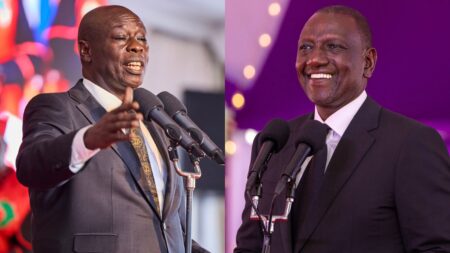
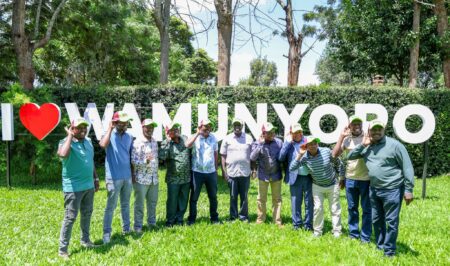
A striking image circulating on social media has ignited intense debate across Kenya’s political landscape. Labour Cabinet Secretary Alfred Mutua is seen kneeling before President William Ruto during a public function—a gesture that has left many Kenyans divided. While some interpret the act as a show of humility and respect, others view it as an unnecessary display of political loyalty bordering on sycophancy.
In Kenyan politics, symbolism carries weight. Gestures, body language, and public conduct often communicate more than speeches themselves. Supporters of Mutua argue that kneeling should not automatically be politicised. In many African cultures, kneeling is a sign of respect, submission to authority, or appreciation. From this perspective, Mutua’s action could simply reflect cultural courtesy or deference to the Head of State.
However, critics see a different picture. They argue that such acts reinforce a culture where leaders appear subordinate rather than independent thinkers capable of challenging power when necessary. In a democratic system, cabinet secretaries are expected to serve the public interest, offer professional advice, and hold firm positions—even when they conflict with the president’s views. Public kneeling, they argue, risks eroding the perception of institutional independence.
The image also comes at a time when President Ruto’s administration faces mounting scrutiny over economic pressures, labor disputes, and governance concerns.
For many citizens grappling with high living costs, political theatrics feel disconnected from everyday struggles. What Kenyans want, critics say, is action, accountability, and results—not symbolic gestures that dominate headlines without solving real problems.
Ultimately, the debate goes beyond Alfred Mutua as an individual. It raises broader questions about leadership style in modern Kenya. Should humility be visibly performed or quietly practised through service delivery? As the conversation continues online, one thing is clear: in Kenyan politics, every gesture matters, and public perception remains as powerful as policy itself.
Here are photos


READ MORE:
Ruto Asks Allies Not To Attack Uhuru Over SHA Criticism