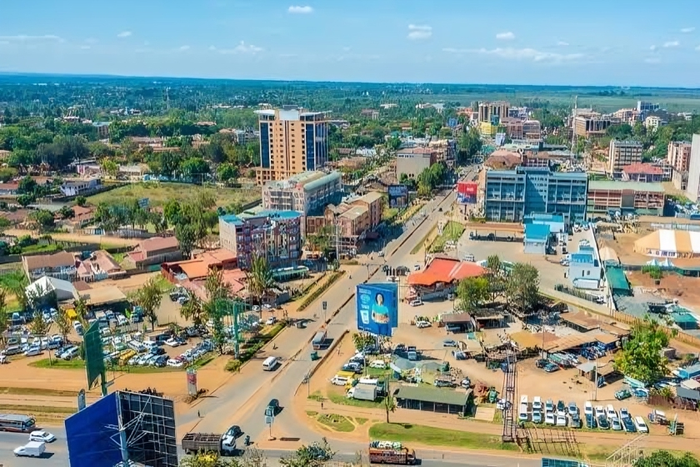
President William Ruto has formally set in motion the process of elevating Thika from a municipality to a full city — a move that carries enormous weight for both the economic future of Mt. Kenya and the political calculations building towards the 2027 general election.
The proposal is now before the Senate’s Devolution and Intergovernmental Relations Committee. This gives it the institutional muscle to move beyond political rhetoric and into law. “If approved, Thika would join Nairobi, Mombasa, Kisumu, Nakuru, and Eldoret as Kenya’s sixth city — a historic milestone for a town long regarded as the economic engine of central Kenya.
This announcement comes on the heels of Ruto’s earlier declaration during the 62nd Jamhuri Day celebrations that the government will construct a new 60-kilometre expressway linking Thika to Nairobi’s Museum Hill interchange.
The project’s set to begin in September 2026. Taken together, the expressway and the city status push represent the most concentrated package of development promises aimed at Thika in the country’s recent history.
Why Thika? Why now?
Thika is not just any town. For decades it has been nicknamed the “Birmingham of Kenya” — a reference to its dense concentration of manufacturing plants, agro-processing industries, and logistics firms. The town sits at a critical crossroads connecting Nairobi to key Mt. Kenya counties, including Kiambu, Murang’a, Nyeri, Kirinyaga, Embu, Meru, and Isiolo, while also serving as a transit hub toward Kitui, Machakos, and Garissa.
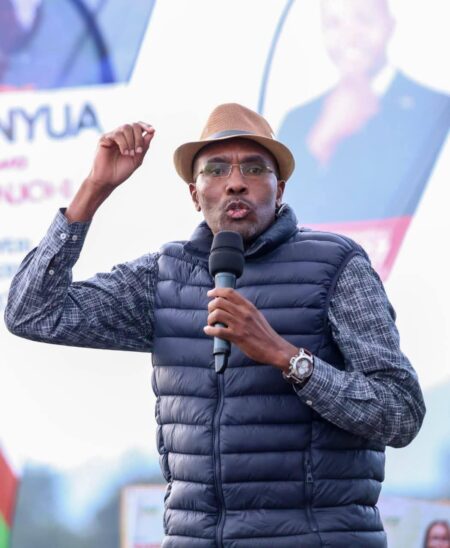
Kiambu Governor Kimani Wamatangi has been among the loudest champions of the city status push, arguing that Thika’s infrastructure profile, population density, and economic activity already qualify it for the elevation.
Under the Urban Areas and Cities Act, cities in Kenya receive larger allocations of national government funding, attract more foreign and local investment, and gain greater administrative autonomy to manage their own affairs without depending on county or national government approval for routine decisions.
For ordinary Thika residents and business owners, this elevation could mean faster approval of business permits, better-maintained roads within city boundaries, improved waste management, and more accountable local governance structures directly answerable to city residents.
The Political Equation
The timing of this announcement is not accidental. Kenya is approaching the 2027 general election, and Ruto is navigating a complex political landscape—particularly in Mt. Kenya, which remains the country’s most decisive voting bloc, with over six million registered voters.
The region delivered Ruto’s 2022 victory largely through the influence of his then-running mate Rigathi Gachagua. Since Gachagua’s dramatic impeachment, the President has been working methodically to rebuild and consolidate his base in the mountain through a steady drumbeat of development pledges. The push for Thika’s city status is the latest and most structurally significant of these moves.
10 Kirinyaga MCAs have already dumped UDA for Gachagua’s DCP — a sign that Ruto’s grip on Mt. Kenya is not as secure as it appears. City status for Thika, if delivered, would be a powerful counter-narrative: proof that staying with UDA produces results.
Critics, however, argue that the timing of such announcements reflects electioneering more than genuine development commitments, noting that promises made in previous electoral cycles have repeatedly stalled after the votes were counted. Moses Kuria has already predicted a tight 2027 race—and every development pledge Ruto makes in Mt. Kenya will be scrutinised against that backdrop.
What the Process Looks Like
Elevating a municipality to city status in Kenya is not an overnight process. It involves a formal application, a public participation exercise, committee review and approval at the Senate, and ultimately a gazette notice by the Cabinet Secretary responsible for devolution.
Residents and stakeholders in Thika and surrounding areas will have an opportunity to formally weigh in on the proposal during the public participation stage — a process that civic groups, business associations, and residents’ organisations should prepare to engage with actively. Ruto’s approach to devolution has not been without controversy—and how this process unfolds will signal whether this is genuine governance or campaign theatre.
What It Means for Residents
For businesses already operating in Thika, city status could unlock access to city-level investment incentives and streamlined licensing. For residents, the key question is whether the elevation will be accompanied by real improvements in water supply, road maintenance, public transport, and service delivery—or whether it will remain a title change with no practical impact on daily life.
The new Nairobi–Thika Expressway, if it begins construction in September as promised, would transform commute times for the hundreds of thousands of people who travel between Thika and Nairobi daily. Combined with city status, the infrastructure upgrade could make Thika one of the most investment-attractive satellite towns in East Africa.
Whether viewed as strategic statecraft or smart electioneering, one thing is clear—Thika’s moment has arrived. Residents will be watching whether the promises become reality.
Read More from CityNews Kenya:
- 10 Kirinyaga MCAs Dump UDA for Gachagua’s DCP—Big Blow to Ruto
- Goons Hired to Disrupt Matiangi’s Rally in Keroka Cornered, Their Probox Set Ablaze
- Moses Kuria Predicts Who Will Win the 2027 Presidential Election
- Ruto’s Singapore Dream: Make Paying Fines Easier Than Bribing Traffic Police
- Natembeya: Over My Dead Body Will I Support Gachagua’s 2027 Bid
- Latest Kenya Politics News