
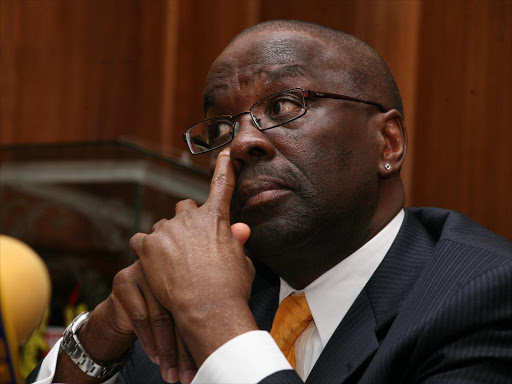
Former Chief Justice Dr. Willy Mutunga has called for the removal of the three High Court judges who upheld the impeachment of former Deputy President Rigathi Gachagua, describing their ruling as a constitutional absurdity that has no place in a country governed by the rule of law.
Justices Antony Mrima, Freda Mugambi, and Eric Ogolla upheld the impeachment of Gachagua by the National Assembly and the Senate, but in the same breath, awarded him damages of Sh50 million because he was denied a fair hearing by the Senate during his trial in October last year. The ruling has been widely condemned by legal scholars and lawyers as deeply contradictory and constitutionally indefensible.
What the three judges appeared to overlook, or chose to ignore, is that the right to a fair trial is a non-derogable right under Article 25 of the 2010 Constitution. Non-derogable means precisely that. It cannot be suspended, qualified, limited, or traded away under any circumstances, regardless of the nature of the proceedings involved. You cannot uphold a process that violated an absolute constitutional right and then attempt to compensate for that violation with a cash award. The two positions cannot coexist within the bounds of any coherent legal reasoning.
Mutunga, one of the most respected voices in Kenya’s constitutional history, reacted to the ruling by citing Article 168 (1)(d) and (e) of the Constitution, provisions that provide the legal basis for the removal of a judge from office for conduct that undermines the Constitution.
“I wonder whether such judgments are not subject to the provisions of Article 168 (1)(d) and (e),” Mutunga wrote on X, in remarks that were pointed, deliberate, and impossible to misread.
Coming from a former Chief Justice who presided over some of the most transformative years of Kenya’s constitutional journey, Mutunga’s words carry enormous weight. They are not the remarks of a bitter critic. They are the considered opinion of a man who understands the Constitution deeply and recognises when it is being used as a prop rather than a guide.