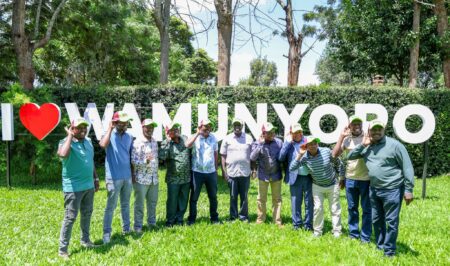
In a transformative move set to reshape secondary education in rural Kenya, Kiharu Member of Parliament Ndindi Nyoro has launched a groundbreaking program that reduces school fees to just 500 Kenyan shillings per term while providing free daily meals to over 12,000 students.
Dubbed the Kiharu Masomo Bora 2026 Edition and announced on Tuesday, the initiative represents one of the most comprehensive education interventions ever attempted at the constituency level in East Africa.
The program covers all 65 day secondary schools in Kiharu, a constituency of roughly 150,000 residents in Murang’a County. Under the new system, students in senior secondary schools will pay a flat fee of 500 shillings per term—a dramatic reduction from the typical 10,000 to 30,000 shillings charged at public day schools.
This steep fee cut effectively removes cost as a barrier for most families in a region where agriculture remains the primary livelihood and financial pressures have intensified in recent years.
A Multi-Pronged Approach to Quality Education
The fee reduction is just the opening move in a holistic approach designed to tackle the full spectrum of obstacles to quality education. Every student will now receive a daily lunch at school, including on Saturdays, when many Kenyan schools hold classes.
The meal plan rotates between githeri—a traditional mix of beans and maize—served three days a week, and rice on the other three days. Students also receive uji, a nutritious porridge, during the morning tea break. On the last Friday of each month, the menu upgrades to chapati, a popular flatbread usually reserved for special occasions at home.
The feeding program represents a significant investment, but organizers argue it delivers benefits beyond nutrition. Hunger remains a persistent distraction in Kenyan classrooms, especially for students from struggling households who may skip breakfast or survive on tea and bread before a long school day. By guaranteeing lunch, the program removes this barrier while easing the financial burden on parents.
Investment in Infrastructure and Learning Materials
Infrastructure development forms another cornerstone of the initiative. Over 50 million shillings have been allocated for new building projects across the 65 schools, with a priority on laboratory construction and upgrades. Science education in rural Kenya has long suffered due to a lack of practical facilities, forcing students to rely heavily on textbooks. The emphasis on laboratories reflects a vision that Kenya’s future economy will require scientific and technical skills that cannot be taught through rote learning alone.
Learning materials also receive a dedicated funding stream, with 10 million shillings earmarked for revision materials through the National Government Constituencies Development Fund this financial year. This comes on top of 20 million shillings allocated in previous years, demonstrating a program that has been steadily building momentum. Together, these investments address longstanding complaints from teachers and parents that government capitation—the per-student funding provided by the national Ministry of Education—falls short of actual school running costs.
To support extracurricular activities, each of the 65 schools will receive an additional 50,000 shillings. These funds are earmarked for music festivals, sporting events, and other co-curricular programs that have often been cut due to tight budgets. Recognizing that education extends beyond academics, the program aims to nurture leadership, teamwork, and creative skills that are as valuable as classroom learning.
Curbing Hidden Costs in Public Education
The program directly tackles hidden costs in Kenya’s supposedly free public education system. Schools are explicitly prohibited from charging any registration fees or additional payments beyond the 500-shilling term fee. For remedial classes—extra tuition for students preparing for national exams—fees are capped at 1,000 shillings per term. Even maintenance and insurance for school buses are covered, treating them as public utilities rather than extra expenses for families.
Additionally, 900,000 shillings have been allocated for prize-giving ceremonies, evenly split between the constituency’s two sub-counties. This allows schools to recognize academic excellence without asking parents to contribute—a common frustration in many communities.
Incentives for Teachers and Principals
Perhaps most striking are the incentives designed for educators. The most improved teacher in each subject area per sub-county will be sent on a fully paid trip to Mombasa, Kenya’s coastal resort city. Teachers who missed last year’s trip due to national exam duties will also benefit this year.
For school principals, the rewards are even more substantial. Heads of the best-performing and most improved schools in each of Kiharu’s six wards—twelve principals in total—will receive fully funded trips to Dubai. Principals who have already visited Dubai may opt for Malaysia instead.
This incentive structure is unconventional in a public education system where teacher motivation is often overlooked. Proponents argue that rewarding excellence can directly improve student outcomes and shift school culture in ways that policy directives alone cannot. Critics, however, may question whether individual rewards foster competition rather than collaboration or if the funds might be better spent on professional development benefiting all teachers.
Promoting Equity in Education
Equity considerations run through the program. Students joining Grade 10 in twenty schools with low enrollment, as well as those entering newly established schools, will receive free uniforms. This targeted assistance acknowledges that enrollment levels often reflect community poverty and ensures that schools serving the poorest students receive additional support. In Kenya’s increasingly competitive education landscape, struggling schools often face a downward spiral as declining enrollment reduces resources, which further discourages new admissions.


READ MORE: