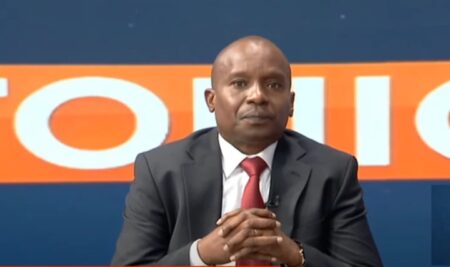
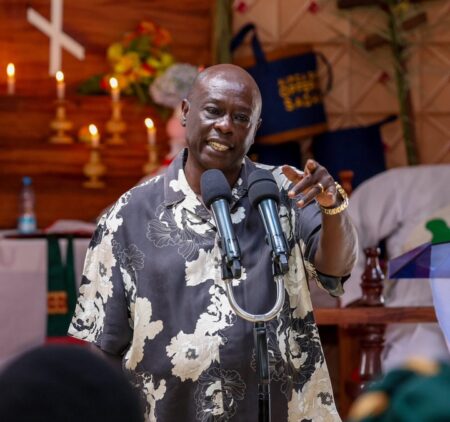
Former President Uhuru Kenyatta has revealed that he has been diagnosed with cancer and urged fellow patients to continue facing the disease with courage.
Speaking on Friday during the burial of his close friend Frank Ireri, who succumbed to the illness, Uhuru shared his own ongoing battle with cancer and recounted how Ireri encouraged him during his difficult moments.
Frank Ireri, the former managing director of the Housing Finance Company of Kenya, passed away on October 18, 2025.
During his eulogy, Uhuru highlighted Ireri’s steadfast support over the past year, particularly during times of personal and health-related challenges.
“In the last year—a significant part of this year—whenever we met, he was incredibly encouraging about the challenges we were facing. He had more experience than many of us and always guided us on how to tackle life’s difficulties, both in health and otherwise,” Uhuru said.
Recalling Ireri’s unwavering support, he narrated how his late friend would hold his hand and reassure him not to worry. He added that some among them are still “fighting” health battles, but they trust that “when it is God’s time, we shall join him.”
Last year, controversial blogger Scophine Aoko Atieno, also known as Maverick Aoko, disclosed that Uhuru was secretly undergoing treatment for lung cancer in Boston, United States.
Cancer has become one of the most significant public health concerns in Kenya, placing increasing pressure on the healthcare system, households, and the national economy. While infectious diseases have traditionally dominated the country’s disease burden, cancer and other non-communicable diseases are now among the leading causes of illness and death, reflecting changing lifestyles, population growth, and longer life expectancy.
Recent national and international estimates indicate that Kenya records over 44,000 new cancer cases annually, with women bearing a slightly higher burden than men. The overall cancer incidence rate stands at approximately 149 cases per 100,000 people, while mortality remains alarmingly high, with nearly 30,000 cancer-related deaths each year. These figures translate to a lifetime risk of about one in six Kenyans developing cancer before the age of 75 and roughly one in nine dying from the disease.
One of the most critical challenges in Kenya’s cancer response is late diagnosis. More than 70 percent of cancer patients are diagnosed at advanced stages, when treatment options are limited, more expensive, and less effective. This is largely due to low public awareness, limited screening programmes, shortages of diagnostic equipment, and uneven access to specialised care, particularly outside major urban centres.
Cancer patterns in Kenya differ by gender. Among women, breast and cervical cancers are the most common and are responsible for a large proportion of cancer deaths. Breast cancer accounts for thousands of new cases each year and remains the leading cause of cancer mortality among women. Cervical cancer, largely preventable through vaccination and screening, continues to claim many lives due to delayed detection. Among men, prostate cancer is the most frequently diagnosed, followed by oesophageal and colorectal cancers. Oesophageal cancer is notably prevalent in certain regions of the country, pointing to possible environmental and dietary risk factors.
Cancer prevalence data shows that over 100,000 Kenyans are currently living with a cancer diagnosis, highlighting the growing demand for long-term treatment, palliative care, and survivorship support services. This rising prevalence also underscores the need for sustainable financing models and expanded oncology services at county and national levels.
Several factors contribute to the rising cancer burden in Kenya. These include tobacco use, harmful alcohol consumption, poor diet, physical inactivity, and exposure to cancer-causing infections such as human papillomavirus and hepatitis viruses. Socioeconomic inequalities further worsen outcomes, as many patients struggle to afford screening, diagnosis, and treatment.
In response, the government has intensified efforts to improve cancer prevention, early detection, and treatment through national cancer control strategies, expanded screening initiatives, and the decentralisation of oncology services. Despite these efforts, significant gaps remain in funding, workforce capacity, and data collection.
In conclusion, cancer poses a serious and growing threat to Kenya’s public health. Addressing this challenge will require sustained investment in prevention, early detection, treatment infrastructure, and public education to reduce mortality and improve survival outcomes across the country.
This is a screenshot of what Aoko shared on her X account.

READ MORE:
Former President Uhuru Kenyatta Reveals He Is Battling Cancer
Hackers Compromise KRA Care X Account with 300,000 Followers
Big Catch in Meru! Police Uncover Bhang Hidden Inside Lorry’s Secret Compartment (PHOTOs)
For more updates follow us on Twitter and Facebook