Importing a car directly from Japanese auction houses (like BE FORWARD or SBT) or UK lease returns is one of the most effective ways to secure a clean, reliable vehicle in Kenya. However, calculating the actual landed cost at the Port of Mombasa remains a major hurdle for buyers—often resulting in unexpected port storage charges, customs re-assessments, or outright vehicle seizure.
Under current Kenya Revenue Authority (KRA) and Kenya Bureau of Standards (KEBS) guidelines, vehicle import taxes are no longer calculated purely on your purchase price. Instead, KRA applies a comprehensive tax stack based on official Current Retail Selling Price (CRSP) schedules, engine displacement, fuel type, and age depreciation factors.
Crucially, Kenya enforces a strict 8-year age limit rule under standard KS 1515:2000. In 2026, only vehicles manufactured in 2019 or newer are legally permitted to enter the country. Importing a vehicle manufactured in 2018 or earlier results in mandatory re-exportation or destruction at the owner’s expense.
Use the Kenya Car Import Tax & Port Landed Cost Calculator below to estimate your exact KRA duties, customs taxes, and total landed cost before transferring funds overseas.
🇰🇪 KRA Car Import Duty & Port Clearance Calculator
Calculate Customs Duty, Excise, VAT, IDF, RDL & Total Landed Cost
🏦 Need Asset Financing or a Trusted Mombasa Clearing Agent?
Don’t let port storage demurrage fees pile up. Connect with vetted clearing partners and asset financing providers.
Request Verified Clearing & Finance Quote 🤝Breakdown of Kenya’s Vehicle Import Tax Stack
When clearing a motor vehicle at the Port of Mombasa, KRA applies a multi-layered tax structure calculated on the vehicle’s CIF (Cost, Insurance & Freight) or official CRSP value:
| Tax Component | Standard Rate | How It Is Calculated |
|---|---|---|
| 1. Import Duty | 35% | Applied directly on the Customs Value (CIF value). |
| 2. Excise Duty | 10% – 35% | Based on engine CC and powertrain (EVs pay 10%, Hybrids pay 20%, petrol/diesel engines over 3000cc pay 35%). Calculated on (CIF + Import Duty). |
| 3. Value Added Tax (VAT) | 16% | Calculated on the cumulative sum of (CIF + Import Duty + Excise Duty). |
| 4. Import Declaration Fee (IDF) | 3.5% | Statutory fee applied on the base CIF value. |
| 5. Railway Development Levy (RDL) | 2.0% | Infrastructure levy applied on the base CIF value. |
4 Critical Rules Every Car Importer Must Follow
1. Year of Manufacture (YOM) vs. Year of First Registration (YOFR)
The single most expensive error importers make is confusing the registration year with the actual manufacture date. Foreign dealer listings often highlight the date a car was licensed in Tokyo or London. However, KEBS and KRA count age strictly from the physical month and year the chassis was manufactured on the assembly line. A car registered in January 2019 but manufactured in December 2018 is illegal to import in 2026.
2. Pre-Shipment Inspection Requirements (QISJ / EAA)
All vehicles imported from Japan, the UK, the UAE, South Africa, or Thailand must undergo mandatory pre-export inspection by authorized agencies (such as Quality Inspection Services Japan – QISJ). Failure to secure a valid pre-inspection certificate prior to shipping results in a 15% penalty fee based on CIF value, plus mandatory local inspection costs at Mombasa Port.
3. Port Clearance & CFS Costs
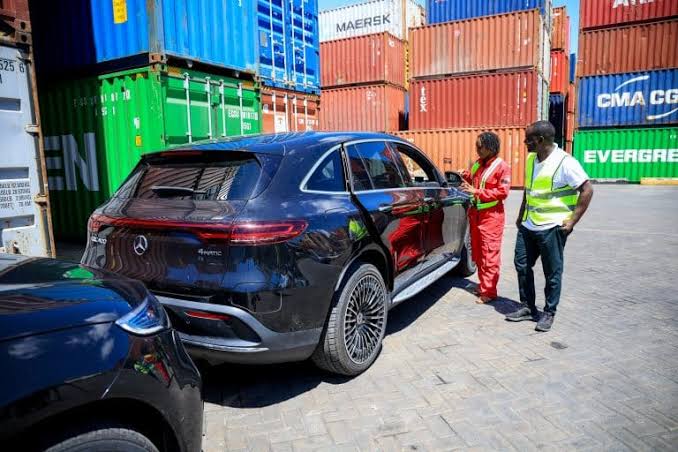
In addition to KRA taxes, budget for local port handling charges. Container Freight Station (CFS) fees, shipping line delivery orders (DO), radiation checks, and licensed clearing agent fees generally range between KES 100,000 and KES 140,000 depending on whether the vehicle arrives via Ro-Ro (Roll-on/Roll-off) or containerized freight.
4. Right-Hand Drive (RHD) Mandate
Under Kenyan law, all passenger and commercial vehicles imported for general road use must be Right-Hand Drive (RHD). Left-Hand Drive (LHD) vehicles are prohibited from entry, with exemptions granted only to specialized military or diplomatic equipment under strict state clearance.