

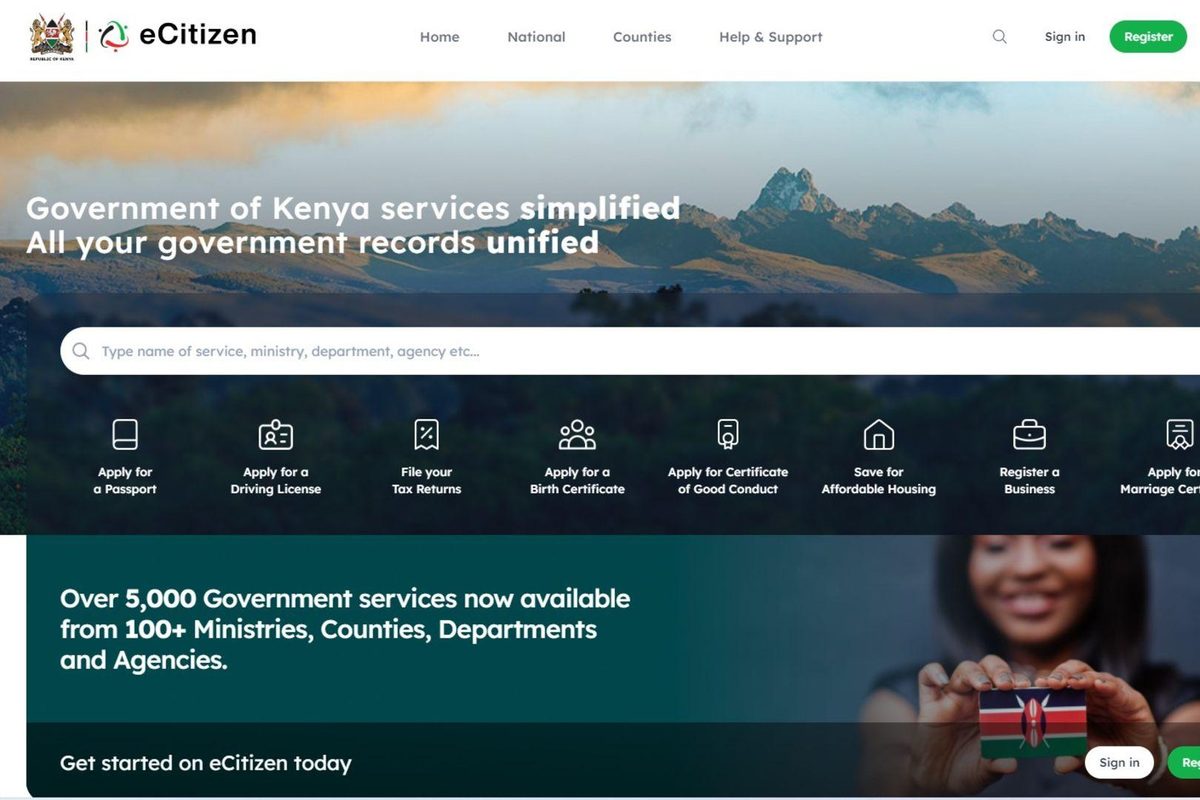
Kenya’s eCitizen platform has been named in an alleged major cyberattack after hackers claimed to have stolen approximately 740GB of government data, including personal identification records, government databases, and computer source code.
The allegations have raised fresh concerns about the security of sensitive information held by the government platform, which Kenyans use to access a wide range of digital public services.
According to cybersecurity monitoring account VECERT Analyzer, a hacker operating under the alias ByteToBreach published the claims on an underground forum on November 22, 2026, at 7:34 pm.
The alleged attackers claim to have exploited a vulnerability in eCitizen’s file-upload system, which they say enabled them to execute malicious code on the platform’s servers.
However, the reported breach, the claimed volume of stolen information, and the alleged compromise of connected authentication systems have not been independently verified.
Hackers Claim 740GB of Government Data Was Stolen
According to the report circulated by VECERT Analyzer, the allegedly stolen information is divided into three main categories:
- 600GB of Know Your Customer (KYC) documents: These reportedly contain personal identification and verification records.
- 100GB of government database records: The alleged data reportedly includes information stored within government databases.
- 40GB of computer source code: This could potentially expose details about the structure and operation of affected software systems if the files are authentic.
The report also identifies file timestamps ranging between November 14 and November 15, 2026.
However, the timestamps alone do not establish when the alleged intrusion occurred or prove that the files originated from eCitizen.
eCitizen OAuth and Single Sign-On Systems Also Mentioned
One of the most concerning aspects of the allegations involves claims that the attackers accessed eCitizen’s OAuth and Single Sign-On (SSO) systems.
These technologies allow users to authenticate their identities and access multiple connected services without having to maintain separate login credentials for every platform.
If the claims involving authentication infrastructure are substantiated, the potential implications could extend beyond the information stored directly on eCitizen.
The report raises questions about possible exposure involving services and institutions linked to the platform, including the Social Health Authority (SHA), the Directorate of Criminal Investigations (DCI), Safaricom and the National Police Service.
However, there is currently no independent confirmation that any of these institutions’ systems were accessed or compromised in the alleged incident.
What the Alleged eCitizen Data Breach Could Mean for Kenyans
If the reported theft of personal identification documents is confirmed, affected individuals could face increased risks of identity theft, impersonation and targeted fraud.
Cybercriminals could potentially exploit exposed identification information to impersonate individuals, create fraudulent accounts or develop convincing phishing campaigns targeting unsuspecting victims.
The alleged exposure of government database records could also raise questions about the confidentiality of information held by public institutions.
Meanwhile, if authentication systems or their security credentials were compromised, the potential consequences could be more extensive, depending on the level of access obtained and the services relying on those systems.
The alleged theft of source code could introduce additional security concerns if it exposes software vulnerabilities that attackers could subsequently exploit.
Nevertheless, these are potential risks associated with the claims, not confirmed consequences of the reported incident.
Government Yet to Publicly Confirm the Alleged Breach
As of November 24, 2026, the alleged eCitizen data breach had not been publicly confirmed by the Ministry of Information, Communications and the Digital Economy, the National KE-CIRT/CC or the Office of the Data Protection Commissioner.
The claims have therefore not established whether government systems were successfully breached, whether the reported information was genuinely extracted or how many individuals could potentially be affected.
An independent forensic investigation would be necessary to establish the authenticity and origin of the alleged files, determine whether unauthorised access occurred and identify any potentially affected systems.
The allegations come amid wider concerns about cybersecurity threats targeting Kenya’s digital infrastructure.
In October 2026, the Communications Authority of Kenya acknowledged that the e-government sector had experienced a cybersecurity breach earlier in the year, although its report did not identify the affected government system or establish whether personal information had been stolen.
For now, the reported 740GB eCitizen data theft remains an unverified allegation.
Kenyans will be watching for an official response clarifying whether the platform’s systems were compromised and whether personal information held within the government’s digital services infrastructure remains secure.