It looks strange. It is actually genius. The low-tech security habit of one of the world’s most surveilled leaders explains everything about the invisible cyber war being fought at the highest levels of government.
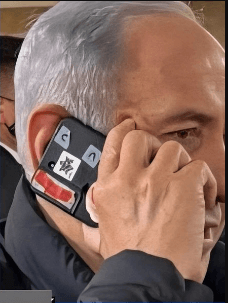
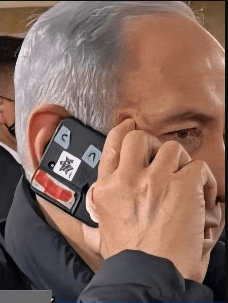
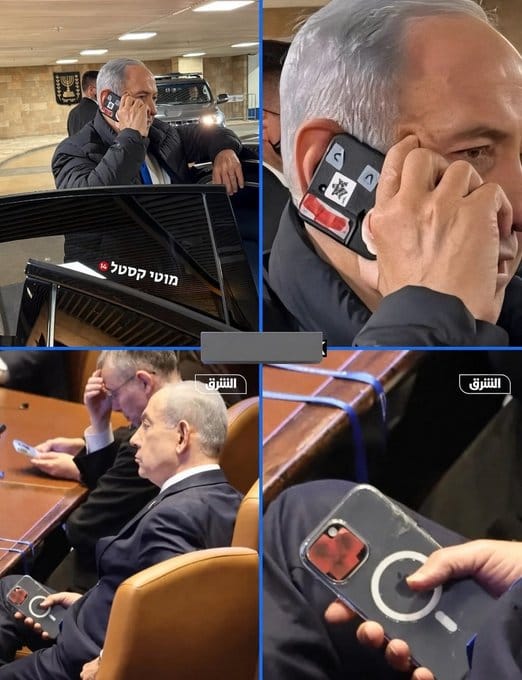
Photos of Israeli Prime Minister Benjamin Netanyahu have been circulating online, and sharp-eyed observers noticed something unusual: red tamper-evident stickers and strips of tape covering the camera lenses on his phone. The reaction ranged from amusement to curiosity. But there is nothing careless or accidental about what Netanyahu is doing. It is a deliberate, calculated security measure — and the reasoning behind it reveals just how serious the cyber threat landscape is for world leaders today.
The Threat Is Real: Zero-Click Spyware
Modern spyware does not need you to click a link or download a file. Zero-click exploits, the kind deployed by tools like Pegasus, can silently compromise a smartphone without any interaction from the owner. Once a device is infected, an attacker can activate the camera remotely, capturing images or video of whatever is in front of the lens — classified documents, confidential meetings, sensitive surroundings — all without the owner ever knowing.
This technique, known as camfecting, has been used against journalists, activists, and government officials worldwide. For the Prime Minister of a country like Israel, which operates in one of the most hostile intelligence environments on the planet, the risk is not theoretical. It is constant.
Low-Tech Fix for a High-Tech Problem
The elegant irony of Netanyahu’s solution is that it costs almost nothing. Software can be hacked. Encrypted apps can be broken. Firewalls can be bypassed. But a strip of tape over a camera lens? There is no software patch for that. If the lens is physically blocked, no spyware in the world can see through it.
The red stickers serve a second purpose beyond blocking the lens. They are tamper-evident, meaning that if someone physically removes or disturbs them, the change is immediately visible. This gives Netanyahu a simple, reliable way to know whether his device has been physically interfered with.
Why It Matters in Classified Environments
Netanyahu is regularly photographed with his taped phone inside the Knesset, Israel’s parliament, and the Prime Minister’s Office — two environments where classified briefings happen daily and where sensitive documents may be visible on desks, screens, or in the hands of officials nearby.
Even if the phone’s microphone or data were somehow accessed, blocking the camera removes one of the most damaging vectors of intelligence collection: visual confirmation of classified material. A photo of a document on a desk, a map on a screen, or a diagram in a briefing room can be worth more to an adversary than hours of audio.
Netanyahu Is Not Alone
Covering phone and laptop cameras is standard practice among senior officials in intelligence-heavy environments. FBI Director James Comey famously revealed in 2016 that he covered his laptop camera with tape, a disclosure that prompted millions of ordinary people to do the same. Mark Zuckerberg was photographed at his desk with tape over his MacBook camera. Security professionals have recommended the practice for years.
What makes Netanyahu’s case notable is that he applies the same thinking to his phone, in public, consistently — a visible reminder that the cyber threat to senior officials is not a background concern but an ever-present operational reality.
What This Means for the Rest of Us
You are probably not running a country under constant intelligence threat. But the underlying principle applies more broadly than most people realise. Smartphone cameras can be accessed by malicious apps. Laptop webcams have been remotely activated without the user’s knowledge. The practice of physically covering cameras is not paranoia — it is one of the simplest, most effective steps anyone can take to protect their privacy.
The next time you see a world leader with tape on their phone, do not laugh. They know something about the world they operate in that most people never get to see.
Sometimes the simplest solutions are the most powerful ones.