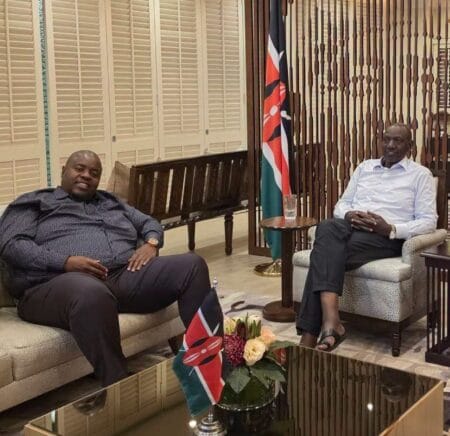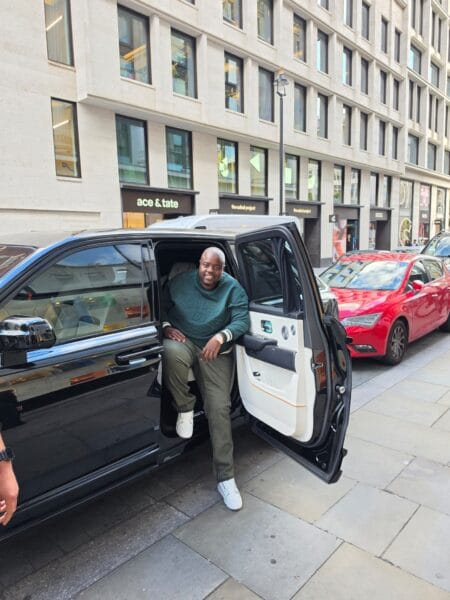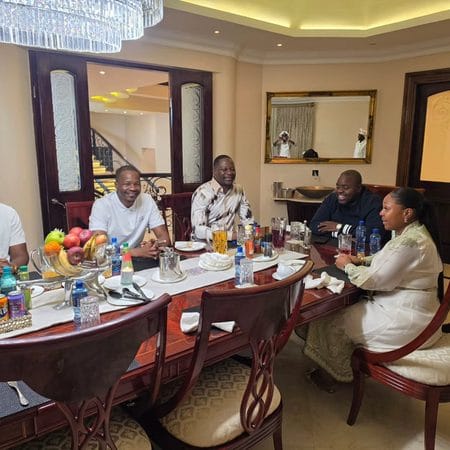
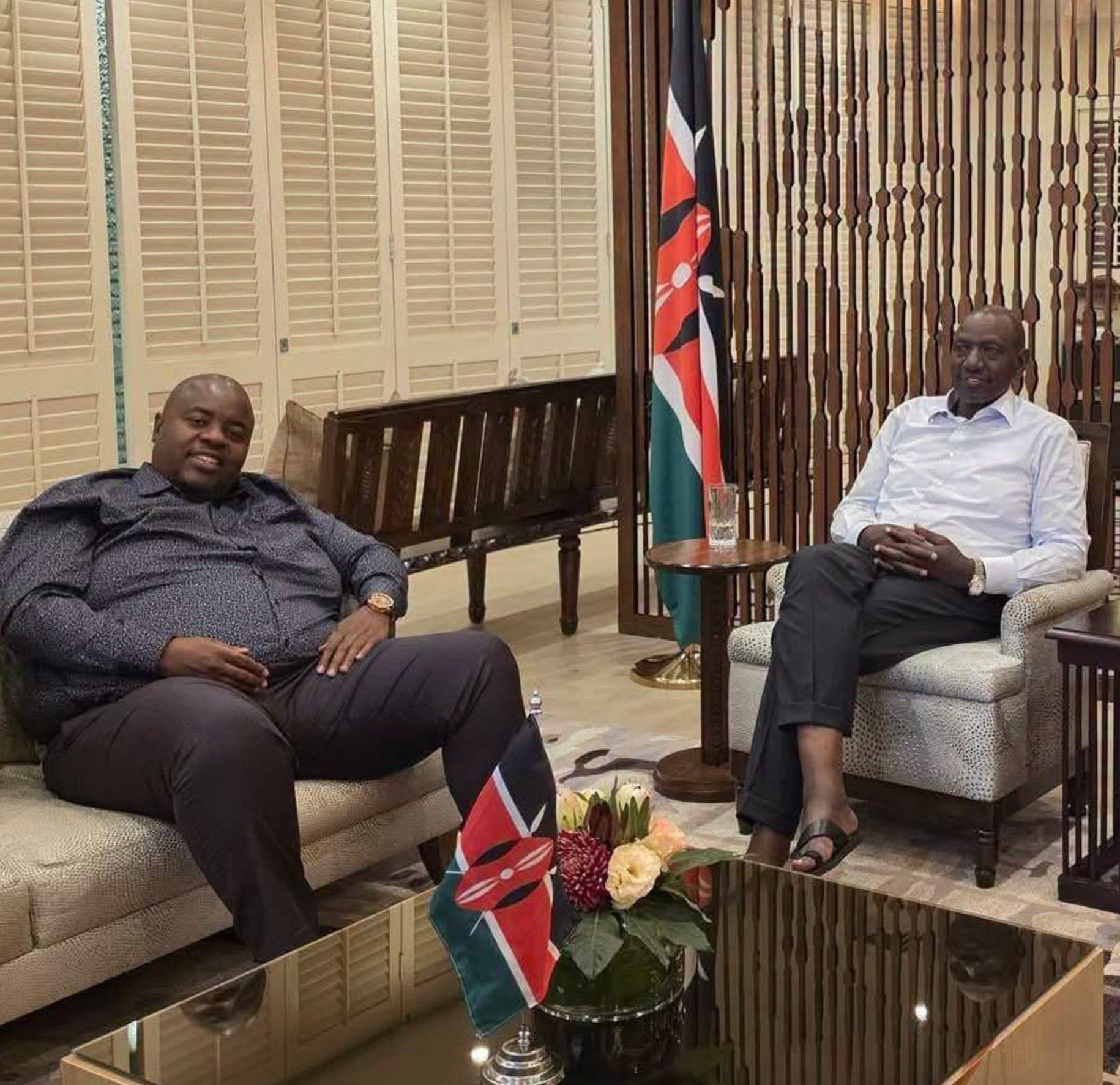
Perhaps Wicknell Chivayo’s most direct influence in Kenya, if my hunch is right, was teaching the government to deploy influencers to shape public opinion ahead of the 2027 elections.
The Zimbabwean sharp boy died yesterday in a helicopter crash, alongside his wife and four others.
He was 42.
You have noticed it. Over the past six months, certain podcasters and comedians have been pushing the government’s agenda with an urgency and arrogance that is hard to miss.
At the same time, there has been a flurry of sporting events, sijui Man U fans versus Arsenal fans, and all manner of bread and circuses that give the youth the illusion of government inclusion and support.
I have nothing against young men being paid to push the government’s narrative, but I am always for transparency.
As I always say, I am team Sifuna, for better or worse, so anyone reading this already knows my biases.
Still, I believe in the inherent goodness of governments. I love my country, and I am patriotic enough to see the good things even someone as unqualified as Ruto can pull off.
But podcasters and comedians must guard their integrity; their craft should stand above tribalism and government corruption.
Their messaging felt off to me, and, judging by the reaction, to everyone else.
Why do I connect this to Chivayo? A South African-Zimbabwean friend once explained to me how ZANU-PF holds on to the young. Zimbabwe is run by men who look about a hundred years old.
The president might as well be 98 and his deputy 83.
And the party has just rewritten the rules so that the president stays on, and Parliament, not voters, picks him.
Old men like that cannot speak to TikTok kids. So, my friend said, they buy musicians and influencers instead, and Chivayo was the man handed the money to dispense.
When he told me this, the trending story in Kenya was Oga Obinna’s boxing match, sponsored by the president, even as he creatively kept his distance. I may be wrong, but it is hard not to see the same playbook here, and Chivayo was a regular at State House.
You can imagine what kind of power or influence he had to be driven around by the president.
I saw some Zambian online posts calling Ruto Chivayo’s chauffeur. I didn’t like that. Rais wetu apewe heshima. I mean that.
I am not opposed to any of the above activities, or the government trying to connect with the youth.
I simply believe they should not be politicised.
They point to sectors that could grow to absorb our many unemployed youth.
Deployed as a cheap campaign ploy, they underwhelm, but that is where the imagination of people like Chivayo ends.
People like Chivayo don’t think about long-term investments in the creative sector; they just pick a few self-made artists, pour money, and hooray!
You will also notice comment sections filling up with insults, either from bots or from a crowd of angry people, combative in ways that make no sense.
Someone told me the government has hired a PR firm that is borrowing from the divisive playbook that has propped up some divisive governments around the world. But I think people are looking for healing.
Chivayo’s name has been whispered in connection with disputed elections in Zimbabwe, Tanzania and Zambia, though nothing was ever proven, and he trailed a long list of corruption cases.
Some speculated he would have a hand in Kenya’s 2027 race too.
Wake him in the middle of the night, ask for his job description in five words, and he would have had no answer.
We knew him simply as a sharp boy, what we used to call a flamboyant businessman in the newsroom.
Ahead of next year’s election, which many people expect to be rigged in one form or another, you can already read the messaging from people like Duale.
To me, it looks like conditioning, laying the ground for the public’s psychological surrender to what many believe is inevitable.
Regardless, I hope Chivayo was loved by those closest to him. Forty-two is such a young age to die. But he lived a full life, dining with kings, whatever their dubious standing.
In my book Man About Town, I wrote a satirical essay arguing that money can buy love.
For people like Chivayo, the ostentatious display of wealth speaks of a certain lack, a lack of love, and money tends to plug that hole.
At my age, you realise you have hung out with plenty of the Chivayo type: men whose crowds would evaporate if you took away the money. So they use their wealth to pull people into their circle.
I don’t know what kind of human being he was. I only knew the headlines.
One only wonders how many plans his sudden death has thrown into disarray.
But mimi, I know death will find us anywhere. Still, I am never climbing into a helicopter, man, unless it is an emergency. And I don’t want Sifuna anywhere near a chopper.
By Silas Nyanchwani