
In 2020, award-winning photojournalist and human rights crusader Boniface Mwangi coined a phrase that has never felt more relevant. “Other countries have a mafia. In Kenya, the mafia has a country,” Mwangi said, words he frequently used to describe a state captured by corrupt political elites, judicial cartels, and state-sanctioned actors who place personal wealth and power far above the welfare of ordinary citizens.
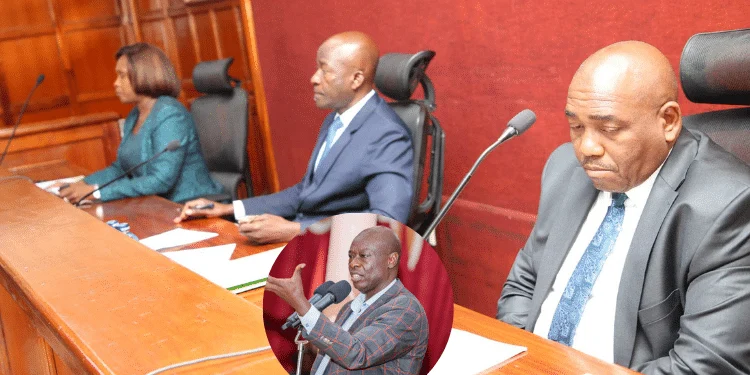
Those words rang loudly on Tuesday when a three-judge bench delivered its ruling on the impeachment of former Deputy President Rigathi Gachagua, a matter that has gripped the country since last year.
Justice Antony Mrima, Justice Freda Mugambi, and Justice Ogolla upheld the impeachment of Gachagua by the National Assembly and the Senate. However, in what many legal observers found deeply contradictory, the bench simultaneously awarded Gachagua Sh50 million because he was denied the right to a fair trial during the Senate process.
For those well-versed in constitutional law, this ruling raises serious and uncomfortable questions. Article 25 of the 2010 Constitution is unambiguous. The right to a fair trial is a non-derogable right, meaning it cannot be suspended, qualified, limited, or traded away under any circumstances. By upholding an impeachment that the bench itself acknowledged was conducted unfairly, the three judges effectively placed a cash figure on a constitutional right that the law says is priceless and absolute. That, by any legal standard, is not justice. It is a contradiction dressed in judicial robes.
Sources deep within the judiciary paint a troubling picture of what went on behind the scenes. According to insiders, the three-judge bench was under intense pressure from the executive, with the state keenly watching how the judges would rule. The half-baked outcome, sources say, was a calculated attempt to appear balanced while ultimately delivering the verdict that those in power wanted.
One source stated plainly that the judges played a high-stakes game of subverting the Constitution to please their masters and that the ruling as it stands is a direct threat to jurisprudence in Kenya, setting a dangerous precedent that constitutional rights can be violated as long as the victim is handed a cheque at the end.
If Boniface Mwangi’s words were prophetic in 2020, Tuesday’s ruling suggests that very little has changed. The mafia, it seems, still has a country.