Morocco rewrote the script in Qatar. Now, with nine African nations at the biggest World Cup ever, the continent is ready to go further than it has ever gone before.
In 2022, Morocco became the first African nation to reach a World Cup semi-final. They did it with discipline, heart, tactical brilliance, and the deafening support of a continent that had waited too long for a moment like that. As the 2026 World Cup begins, Africa arrives not as a guest at football’s top table—but as a contender.
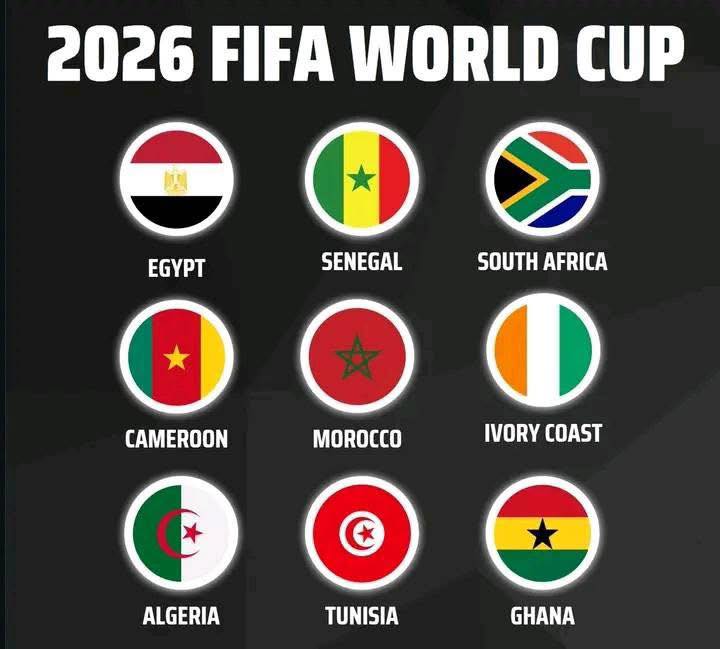
Nine African nations have qualified for 2026, the most the continent has ever sent to a World Cup. Here are the ones who could genuinely make noise.
Morocco—The Benchmark
The Atlas Lions return as Africa’s highest-ranked nation and the defending standard-bearers of continental football. Their 2022 run was not a fluke—it was a statement. With an organized defense and devastating counter-attacking quality, Morocco has built something genuine and lasting. This is a team that believes it can win a World Cup. And they might be right.
Egypt—Salah’s Final Mission
Mohamed Salah carries Egypt to this tournament on a left foot that has already delivered more to football than most players achieve in a lifetime. At 33, this is almost certainly his last World Cup — and Egypt has never reached a knockout round in the modern era. The storyline writes itself. Whether Salah can single-handedly drag a team to the last 16 is the question that will define his World Cup legacy.
Senegal—The Lions Have Teeth
Senegal reached the quarter-finals in 2002 and have been knocking on the door ever since. With a squad that combines European league quality with raw pace and physicality, they are built for knockout football. If they come through a manageable group, do not be surprised to see them in the last eight.
Ivory Coast—The Sleeping Giant Wakes
The Elephants have long been considered one of Africa’s most talented nations, carrying the legacy of Didier Drogba’s golden generation. The current squad is hungry to create its own legacy. With pace, power, and a new generation of European-based talent, they are more than capable of causing a major upset.
“Africa does not arrive at the 2026 World Cup hoping to survive. It arrives believing it can win.”
The 2026 World Cup’s expanded format, with 48 teams and a round of 32 before the last 16, actually benefits African sides. More games mean more chances to recover from a bad opening result, more time for tournament experience to build, and more opportunity for the tactical discipline that has become Africa’s calling card to pay dividends.
Morocco showed the world what is possible. Nine nations are ready to show the world what comes next.