One of the world’s most elite military academies admits cadets based on merit and leadership potential. So why does its international intake increasingly read like a who’s who of Africa’s most entrenched ruling families?
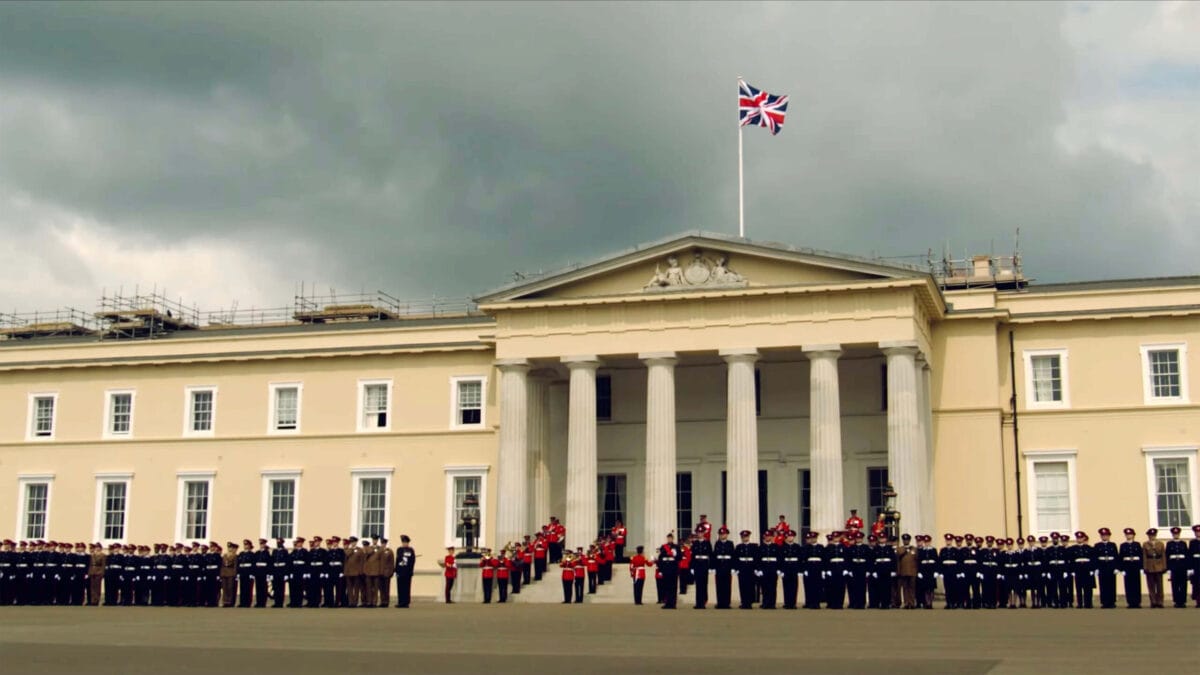
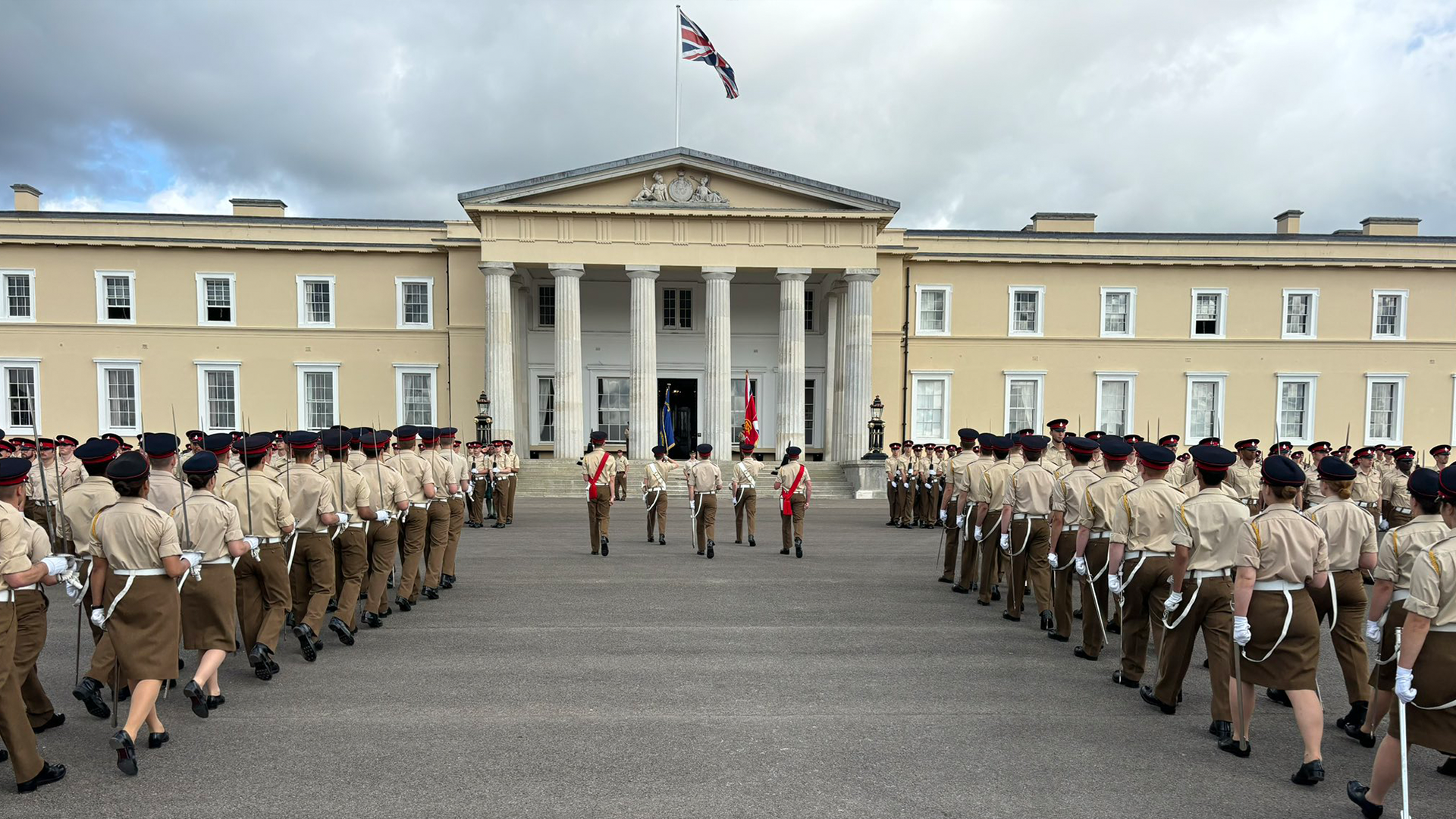
The Royal Military Academy Sandhurst sits on 1,500 acres of manicured grounds on the Surrey-Berkshire border and has, since 1812, produced some of the most decorated military leaders in the world. Its motto is “Serve to Lead.” Its 44-week commissioning course is gruelling, demanding, and widely regarded as one of the finest officer training programmes anywhere on earth.
It also has a growing problem: an increasingly visible pattern of African leaders sending their sons — and their sons’ sons — through its gates, raising serious questions about whether admission to one of the world’s most elite military institutions is being shaped by lineage and diplomatic relationships rather than the merit it publicly espouses.
The Pattern Taking Shape
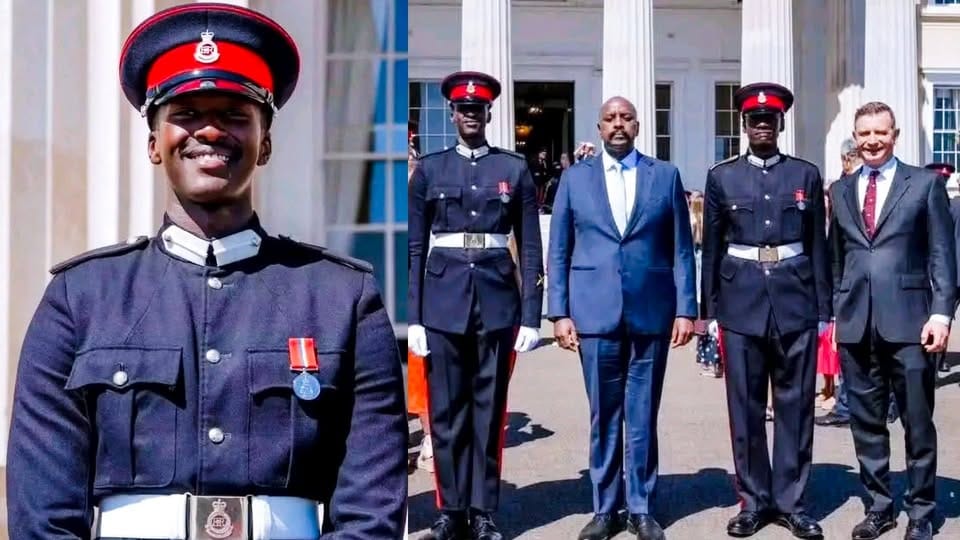
The most recent and striking example comes from Uganda. In August 2026, Ruhamya Kainerugaba — grandson of President Yoweri Museveni and son of General Muhoozi Kainerugaba, Uganda’s Chief of Defence Forces — graduated from Sandhurst. General Muhoozi himself is a Sandhurst graduate, having completed his officer cadet course there in 2000. That means three generations of Uganda’s most powerful family have now passed through the same British academy.
Uganda’s connection runs deeper still. Both Ruhamya and fellow Ugandan cadet Andrew Bakira Ruyondo — who won the prestigious International Sword for best overseas cadet in their intake — were sponsored by the Uganda People’s Defence Forces to attend the 44-week course. Bakira’s family carries its own deep links to the National Resistance Army struggle of the 1980s that brought Museveni to power.
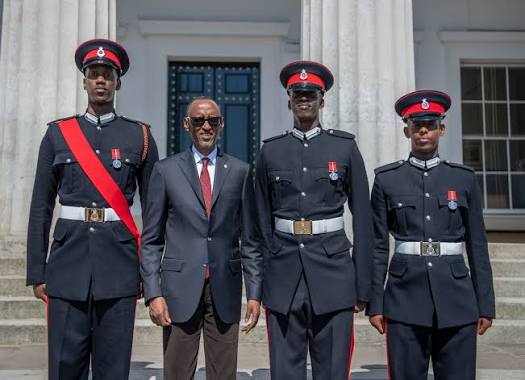
Rwanda offers another data point. Lieutenant Ian Kagame, son of President Paul Kagame, graduated from Sandhurst as a Second Lieutenant in 2022. Kagame has been in power since 2000 and has shown no inclination to leave. His son now holds a British-trained military commission.
This Is Not New — But It Is Getting Harder to Ignore
Sandhurst has a long and well-documented history of admitting foreign royalty and the sons of foreign leaders. Four reigning Arab monarchs are Sandhurst graduates: King Abdullah of Jordan, King Hamad of Bahrain, Sheikh Tamim, Emir of Qatar, and Sultan Qaboos of Oman. Generations of Gulf families have sent their children through its gates, and the academy has actively cultivated these relationships as part of Britain’s broader foreign policy and defence diplomacy strategy.
What is changing is the African dimension of this pattern, and the specific profile of the families now sending their children. Uganda under Museveni has been in power since 1986 — four decades. Rwanda under Kagame has progressively tightened its grip on political space. These are not the children of democratic leaders rotating through office. These are the children and grandchildren of men who have made a life’s work of staying in power.
The Admission Question
Sandhurst insists that international cadets are admitted based on their own merit, leadership potential, and the recommendation of their home country’s military. The academy’s commissioning course makes no special accommodations for rank or family name: all cadets sleep in the same rooms, eat the same food, run the same miles, and are assessed against the same standards.
But the selection process for international cadets is not fully transparent. Countries are allocated places through bilateral defence agreements with the UK government, and who fills those places is ultimately decided by the sending country’s military leadership. In Uganda’s case, that military leadership is the Kainerugaba family. The question of whether the UPDF would have sponsored Ruhamya were his grandfather not the President and his father not the Chief of Defence Forces is one that answers itself.
What Sandhurst Offers That Money Cannot Buy
A Sandhurst commission carries enormous symbolic and practical value. It signals international legitimacy. It builds relationships with British military officers who will go on to occupy senior positions across NATO and the Commonwealth. It provides a network that lasts a lifetime — a cohort of future generals and defence ministers from across the world, all of whom trained on the same parade ground.
For the son or grandson of an African leader who may one day seek to inherit power, that network is invaluable. A Sandhurst commission wraps their eventual rise in the language of meritocracy and military professionalism, making it harder to challenge and easier to legitimise internationally.
Britain’s Calculations
The United Kingdom is not naive about what it is doing. Sandhurst’s international intake has always been as much a foreign policy tool as a training programme. Training the sons of foreign leaders creates personal relationships and obligations that translate into intelligence sharing, defence contracts, basing rights, and diplomatic goodwill. The academy described by one of its commandants as “a place where future leaders get to know each other” is, precisely, a relationship-building machine.
The uncomfortable question this raises is whether Britain is actively facilitating the dynastic entrenchment of authoritarian power in Africa in exchange for those diplomatic and commercial benefits. Training the grandson of a man who has ruled Uganda for 40 years — and the son of the man most widely seen as his designated successor — is not a neutral act.
The Merit Question
None of this is to say that Ruhamya Kainerugaba, Ian Kagame, or any other child of an African leader who has passed through Sandhurst did not work hard once they got there. The course is demanding regardless of who your father is, and the academy does not manufacture commissions. Several African cadets have won top honours at Sandhurst on genuine ability.
The problem is not what happens inside Sandhurst’s gates. It is what happens before them. Merit in admissions means nothing if the process by which international cadets are nominated is controlled by the very families whose children are being admitted. A system that allows a sitting president’s military to nominate candidates to an elite foreign institution is a system that will, predictably, produce nominations that serve the president’s family.
For an institution that has trained generations of military leaders and holds genuine influence over how the officers of tomorrow are shaped, that is a question worth asking loudly: who exactly is Sandhurst serving when it accepts the children of Africa’s most entrenched rulers?
Serve to lead — or serve to inherit?
📌 Related Articles: