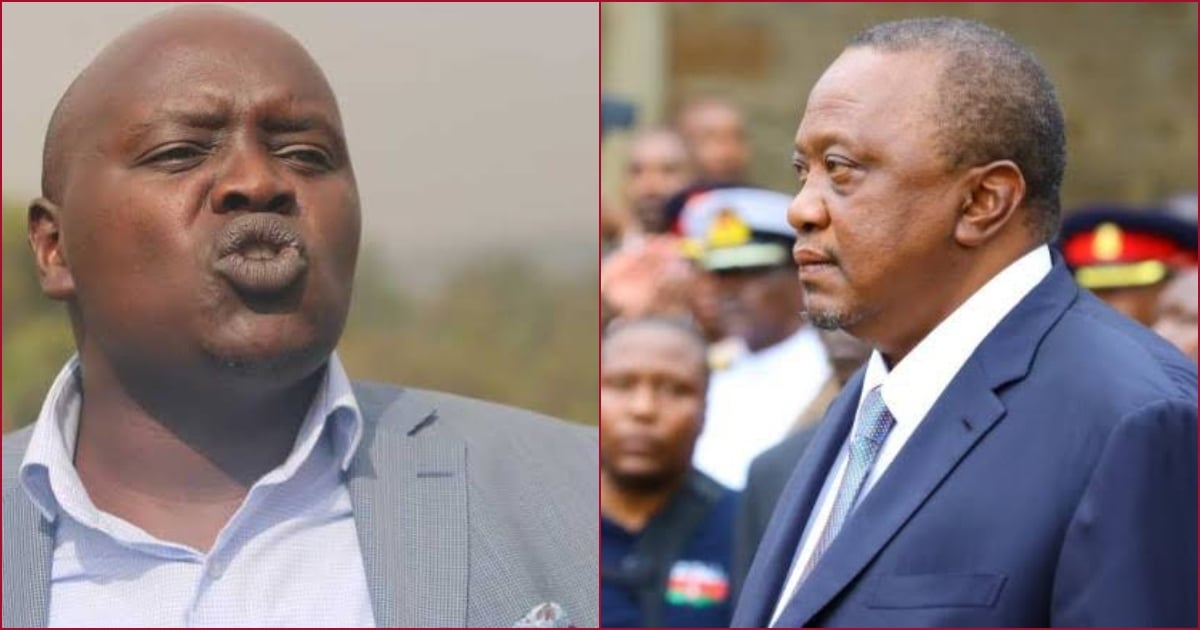
As Uhuru Kenyatta openly endorses Fred Matiang’i for 2027, Kenya Kwanza senators have had enough — and they want the Auditor General to follow the money.
Nandi Senator Samson Cherargei lit the political equivalent of a bonfire on Monday, May 4, 2026, when he formally tabled a motion in the Kenya Senate seeking to strip former President Uhuru Kenyatta of his state-funded retirement benefits. The motion, backed by a coalition of lawmakers aligned to President William Ruto’s Kenya Kwanza administration, calls on Parliament to either withdraw or significantly reduce the package that currently costs Kenyan taxpayers approximately Ksh 362 million annually.
The timing is no coincidence. Just days before Cherargei walked into the Senate chamber, Uhuru had taken to the phone at a Nairobi event, delivering a live address to Jubilee Party members in Narok in which he endorsed former Interior Cabinet Secretary Fred Matiang’i as his preferred candidate for the 2027 presidency. The endorsement sent shockwaves through the political establishment and drew immediate fire from Kenya Kwanza’s inner circle, who accused the fourth president of not only meddling in politics but doing so while drawing a generous taxpayer-funded stipend.
“If you behave yourself like a retired president, people will respect you.” — Senate Majority Leader Aaron Cheruiyot
WHAT THE PRESIDENTIAL RETIREMENT BENEFITS ACT ACTUALLY SAYS
The law at the heart of this dispute — the Presidential Retirement Benefits Act — was designed to afford former Kenyan presidents a dignified retirement while keeping them out of the partisan trenches. Section 6 of the Act restricts a retired president from active engagement in political party activities beyond six months after leaving office, envisioning former heads of state as neutral, advisory figures available to serve national interests rather than specific political factions. Cherargei’s motion argues that Kenyatta has violated both the spirit and the letter of this provision through a documented pattern of conduct: attending political rallies, publicly endorsing candidates, and consulting with opposition political formations.
The current package for Kenyatta includes a monthly pension set at 80 percent of the sitting presidential salary, a lump-sum payment equal to one year’s salary per term served, housing allowances, a full security detail, staff support, medical cover, and travel benefits. The total operational cost to taxpayers has been budgeted at Ksh 362 million for the 2025/26 financial year — down from Ksh 448.7 million the previous year following an earlier dispute between the former president and the current government.
JUBILEE FIRES BACK
The response from Jubilee Party was swift and forceful. Dr Fred Matiang’i—himself the object of Uhuru’s endorsement—dismissed the motion as a transparent act of political intimidation. Speaking to journalists, Matiang’i described Kenyatta as a fully paid-up Jubilee member exercising his constitutional right to political participation and called on the government to focus on governing rather than punishing critics. He also revealed, pointedly, that Kenyatta had reportedly been denied some of his retirement entitlements even before the Cherargei motion, a claim that puts the government on the defensive regarding due process and the rule of law.
Kenyatta himself addressed the controversy directly, asking why his critics were so determined to silence him. ‘I am not looking for any seat,’ he said at a separate public engagement. ‘I have a right to defend my political party.’ The former president has consistently positioned his political activities as the legitimate exercise of a citizen’s rights, not as the conduct of a retired head of state seeking power.
THE BIGGER PICTURE: 2027 BEGINS NOW
What makes this moment so combustible is not merely the legal debate over retirement perks. It is the unmistakable signal that Kenya’s 2027 election campaign has already begun in earnest, more than a year before polling day. The move to pursue Uhuru through parliamentary motions reflects a broader Kenya Kwanza strategy to neutralise opposition figures and limit the space available to potential challengers. For ordinary Kenyans watching these events unfold, the spectacle of former political allies turning on each other in such dramatic fashion has produced a mixture of dark amusement and genuine concern about the health of the nation’s democracy.
READ MORE:
I Will Not Retire From Politics – Uhuru Tells Ruto And His Surrogates
Ruto Pleads With Kikuyus to Back Him for 10 Years, Just Like He Stood by Uhuru