Iran-backed Houthi rebels in Yemen have launched a fresh wave of missiles and drones at Saudi Arabia’s Abha International Airport, marking one of the most significant escalations between the two sides in years and reigniting fears of a broader regional conflict.
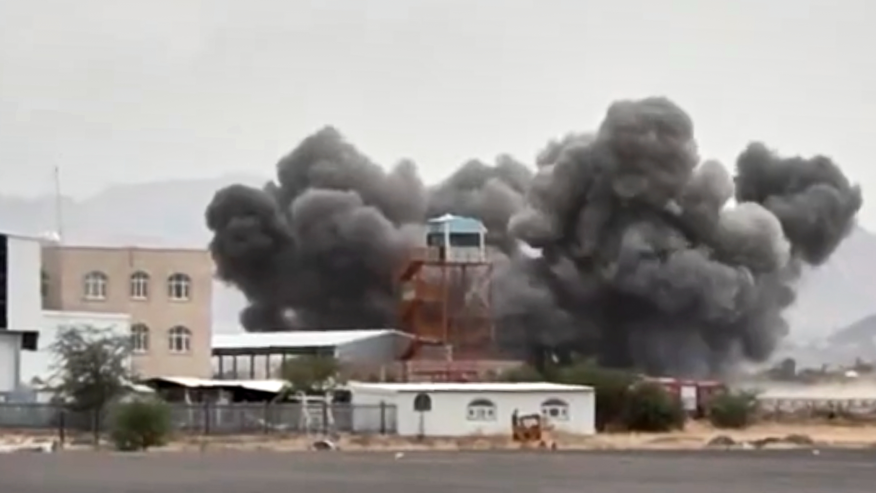
The Houthis said the strikes on Monday were a direct response to Saudi airstrikes that hit Sanaa International Airport earlier in the day. No casualties were reported from either side, but the exchange of fire shattered a period of relative calm that had held between the Houthis and the Saudi-led coalition for some time. Saudi Arabian officials did not immediately respond to requests for comment on the airstrikes in Yemen.
Houthi military spokesman Brigadier General Yahya Saree issued a stark warning to airlines in a video statement on Telegram, urging them to avoid Saudi airspace entirely and insisting the warning should be taken seriously until the blockade on Sanaa International Airport is lifted.
The internationally recognised Yemeni government said the strikes on Sanaa Airport were carried out specifically to prevent an Iranian plane from landing. The tensions surrounding the airport have been simmering since earlier this month, when the Houthis alleged that Saudi aircraft violated their airspace to block an Iranian plane carrying a Houthi delegation travelling to Tehran for the funeral of Iran’s Supreme Leader Ayatollah Ali Khamenei. Yemen’s Defence Minister General Taher al-Aqili confirmed on X that the airport runway was struck on Monday to stop the Iranian plane transporting the Houthi delegation from returning from that funeral.
Saree described the Saudi airstrikes as the end of what he called a period of de-escalation and made clear that retaliation was not a question of if but when.
“This aggression will not go unanswered or unpunished,” he warned.
The UN Security Council convened an emergency meeting on Monday afternoon as alarm grew over the risk that the conflict could spin into something far larger and far more destructive.
“Yemen and the wider region cannot afford another cycle of escalation,” UN Assistant Secretary-General for Political Affairs Khaled Khiari told the fifteen-member council. “We call on all actors to constructively engage in negotiations under UN auspices.”
The Saudi-led Coalition to Restore Legitimacy in Yemen confirmed through its official spokesman, Major General Turki al-Malki, that air defences had intercepted ballistic missiles launched by the Houthis toward the southern region, though no further details were provided.
Yemen’s civil war traces its roots to 2014, when the Houthis seized the capital Sanaa and much of northern Yemen, forcing the recognised government into exile. A Saudi-led coalition that included the United Arab Emirates intervened the following year in a bid to restore the government to power. That coalition has since fractured, with the UAE pulling out of Yemen following a breakdown in its yearslong partnership with Saudi Arabia, leaving the conflict in an even more unpredictable state.
Monday’s exchange of strikes is a reminder that in Yemen, peace is always fragile and the next escalation is never far away.
📌 Related Articles :
Why Donald Trump Was Forced To Use Old Air Force One While Travelling Home From Turkey
Trump to Have Annual Medical Checkup Amid Scrutiny of Recent Ailments
Air France, Airbus Found Guilty of Manslaughter Over 2009 Crash That Killed 228 People