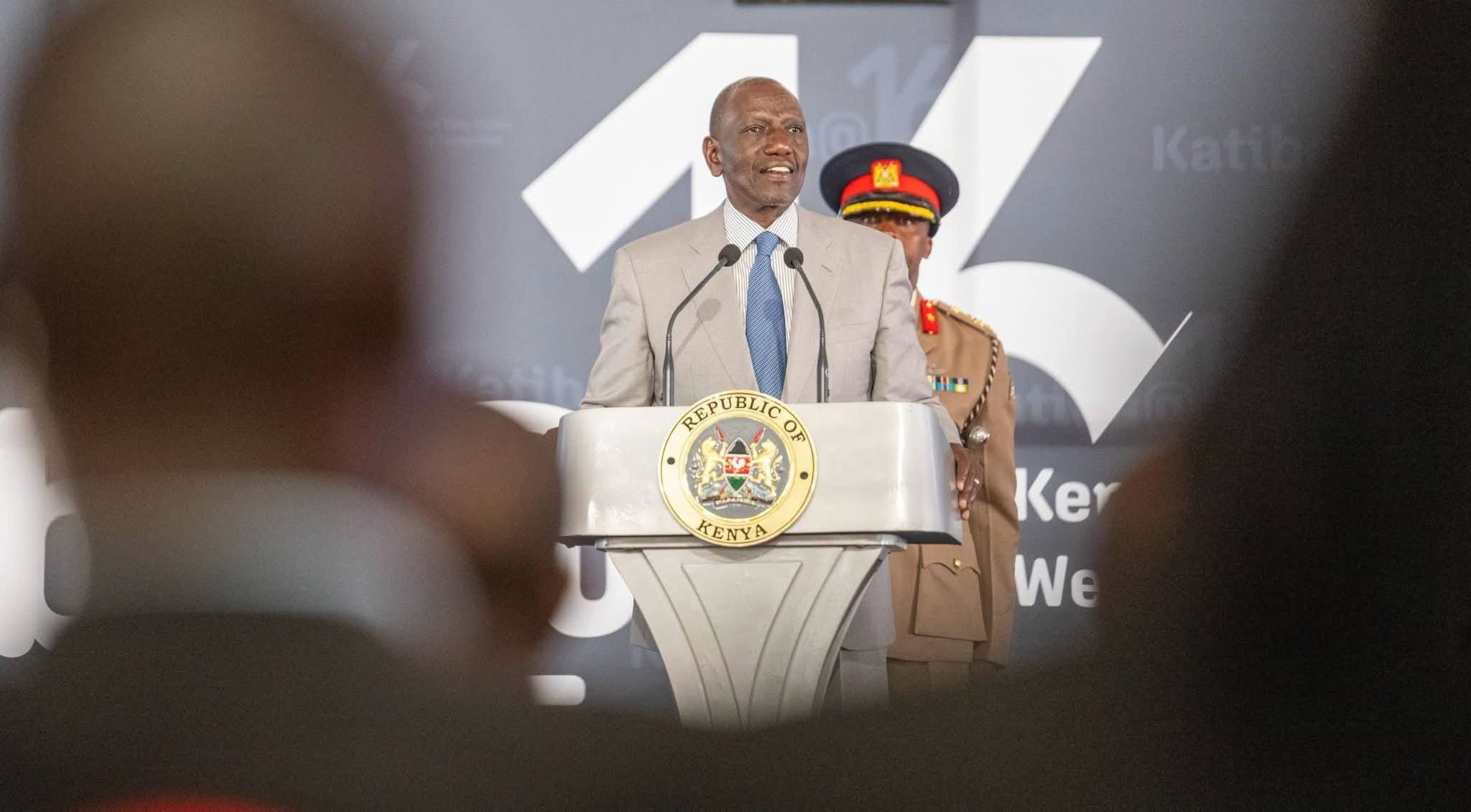
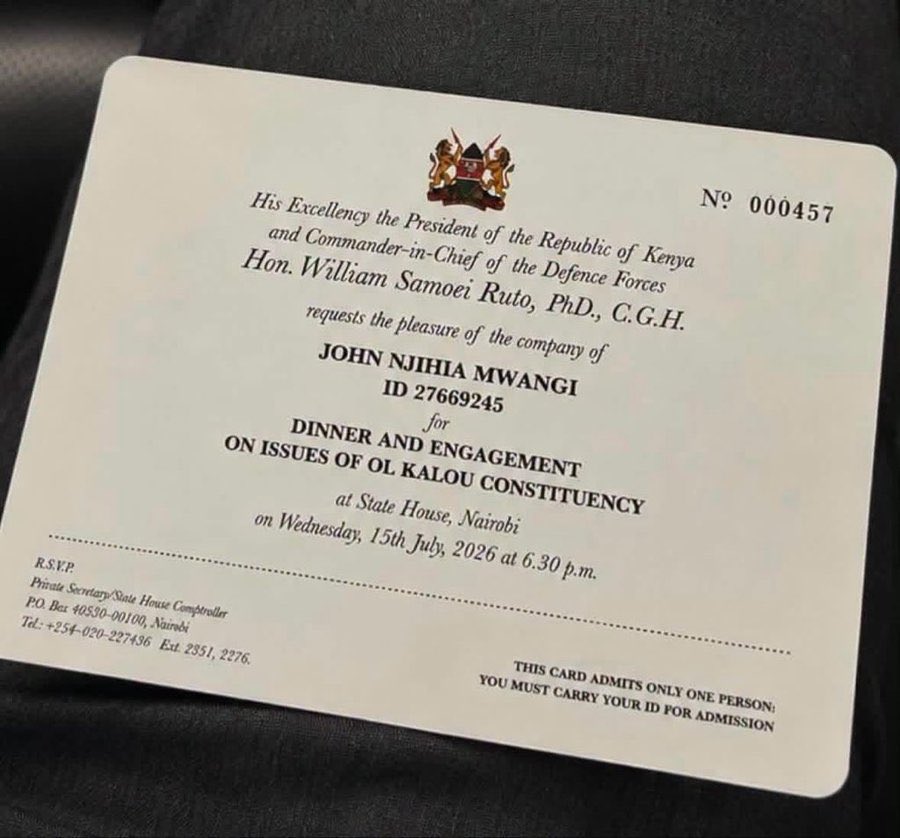
Kenya’s political attention has narrowed onto a single constituency this week. President William Ruto has invited an estimated 20,000 residents of Ol Kalou Constituency to State House in Nairobi for dinner and discussions on local development — timed for July 15, just a day before voters in Nyandarua County head to the polls to fill the parliamentary seat left vacant by the death of MP David Kiaraho.
For critics, the optics could hardly be worse: a mass State House gathering, on the eve of a by-election, for the very voters who will decide it the next morning.
A Contest Bigger Than One Seat
The Ol Kalou by-election, scheduled for Thursday, July 16, was never going to be an ordinary mini-poll. Nine candidates were cleared by the Independent Electoral and Boundaries Commission (IEBC), but the race has effectively become a two-horse fight between the ruling United Democratic Alliance’s Samuel Muchina Nyagah and the Democracy for the Citizens Party’s Sammy Douglas Kamau Waweru-Ngotho, who is backed by former Deputy President Rigathi Gachagua and much of the opposition.
The stakes go well beyond Nyandarua County. Ruto secured close to 87 percent of the Mount Kenya vote in 2022, but relations between his government and parts of the region have soured since Gachagua’s impeachment. A UDA loss here would hand Gachagua fresh proof that his political movement, and not the ruling party, now speaks for Mount Kenya heading into the 2027 general election. A UDA win would let State House argue the opposite. That is why Cabinet Secretaries, Principal Secretaries and senior officials have poured into the constituency for weeks, and why campaign spending has been described as among the heaviest ever recorded for a single-seat contest.
“Development” or Vote-Buying?
The State House dinner invitation is the latest and most visible chapter in a broader pattern that has defined the campaign. In the weeks leading up to the vote, the government rolled out gas cylinders, mattresses branded “GOK,” boreholes, speedboats, and development projects worth billions of shillings — much of it arriving in a constituency that had waited years for the same infrastructure. Opposition figures, including Gachagua and several allied MPs, have called this a coordinated scheme to buy votes using public resources and have asked the IEBC and the Ethics and Anti-Corruption Commission to investigate and even disqualify the UDA candidate.
Government officials and UDA campaigners maintain that the projects are simply the state responding to long-standing needs in the area, and that engaging directly with constituents — including through events like the State House dinner — is standard political outreach, not an inducement.
Activist Boniface Mwangi and other critics dispute that framing, pointing to official-looking invitations requiring national ID for entry and to unverified claims circulating online about cash payments tied to the gathering. The concern voiced across social media is a simple one: feeding 20,000 people the night before an election, the theory goes, is as much about keeping them occupied and drowsy as it is about “development dialogue” — reducing the odds they show up early to vote against the government’s preferred candidate.
The IEBC has not moved to block the event or disqualify any candidate over it. Campaigns entered the mandatory 48-hour “silence period” ahead of polling day on Monday, July 13, a window in which no further campaigning is legally permitted — a rule critics say the State House dinner sits uncomfortably close to, even if it is framed as non-campaign engagement.
A Familiar Script
None of this is unprecedented in Kenyan by-election politics. Rights groups, including the Kenya National Commission on Human Rights, have separately condemned voter bribery, intimidation and misuse of state resources in Ol Kalou this cycle, while noting similar patterns in other recent mini-polls, from cash handouts in Malava to allegations of military aircraft use in Mbeere North. Enforcement of Kenya’s Election Offences Act, which criminalises voter bribery, has historically been inconsistent, and governance analysts warn that letting the pattern repeat in Ol Kalou sets a troubling precedent heading into the far higher-stakes 2027 general election.
Public opinion on the ground is harder to pin down. At least one independent poll conducted just days before the vote showed the opposition-backed DCP candidate with a commanding lead over UDA’s Nyagah — suggesting that, whatever the intent behind the government’s spending spree, it may not be translating cleanly into votes.
What Happens Next
Whether the State House dinner changes minds or simply confirms them, the real test comes Thursday. Polling stations across the constituency’s five wards open with results expected to be transmitted from Ol Kalou Secondary School Hall the same evening. For Ruto, a win offers proof his government still holds Mount Kenya. For Gachagua and the opposition, a win would be their clearest signal yet that the region’s loyalties have shifted — and a preview of the fight to come in 2027.
📌 Related Articles :
- ”Kasongo’s Hotels Are Officially Shut Down”- Gachagua Mocks Ruto as he Exudes Confidence DCP Candidate Will Win in Ol Kalou As Campaigns End Full Statement)
- Gachagua Accuses Cabinet Ministers Deployed to Ol Kalou to Campaign For UDA Candidate of Preying On High Schools And Taking Them To Hotel Rooms
- Babu Owino Accuses Kondele OCS of Working With Goons to Attack Orengo And Sifuna in Kisumu