
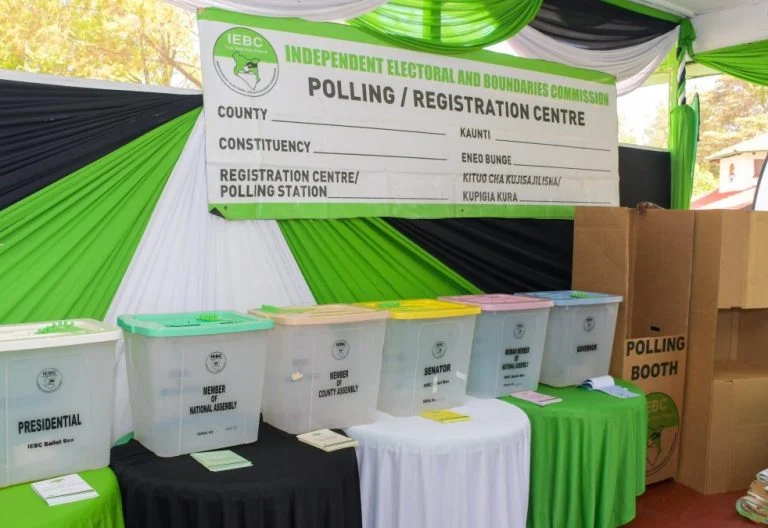
Kenya’s preparations for the 2027 General Election have entered a new phase of debate following the National Assembly’s passage of the Elections (Amendment) (No. 2) Bill, 2024, on October 22, 2026.
The proposed changes seek to remove the legal requirement for the Independent Electoral and Boundaries Commission (IEBC) to livestream the announcement of election results at individual polling stations.
The decision has sparked debate over whether removing the mandatory livestreaming requirement will help prevent confusion caused by premature declarations or weaken public confidence in the electoral process.
With memories of previous disputed elections still shaping Kenya’s political discourse, the central question is whether the proposed changes will strengthen electoral management or create fresh grounds for suspicion ahead of the 2027 polls.
The Bill has cleared the National Assembly, but it is not yet law and remains subject to the remaining legislative process, including presidential assent. <Cite refs={[“turn274510search1″,”turn274510search3”]}/>
1. Why Critics Fear a Crisis of Electoral Confidence
Opponents of the amendment argue that livestreaming offers an additional layer of public scrutiny during one of the most sensitive stages of an election.
Their concerns centre on three main issues.
Reduced real-time transparency
Livestreaming enables citizens, political parties, journalists and election observers to follow results announcements as they happen at polling stations.
Removing the legal obligation for the IEBC to provide a centralised live feed could reduce the amount of information available to the public in real time.
Although the proposed changes retain requirements relating to the electronic transmission and publication of polling-station result forms, critics argue that access to scanned documents is not necessarily the same as watching the announcement process unfold.
The distinction matters because public confidence depends not only on the final figures but also on whether the process used to establish those figures can be independently scrutinised.
The risk of post-election disputes
Kenya’s electoral history demonstrates how disagreements over results, transparency and institutional credibility can become politically explosive.
The disputed elections of 2007 and 2017, in particular, remain important reference points in discussions about electoral reform and public trust.
Critics fear that any reduction in the visibility of the tallying process could give political actors more room to question results, especially if official explanations are delayed or technical problems arise.
However, removing mandatory livestreaming alone does not establish that an election will be disputed or lead to violence. The outcome would depend on several factors, including the integrity of the tallying process, the availability of verifiable records and how electoral disputes are handled.
The danger of an information vacuum
In a highly contested election, uncertainty can create an opportunity for misinformation.
If citizens cannot easily follow results announcements and official updates are delayed, competing political camps may circulate conflicting accounts of who is winning.
Even where scanned result forms remain available online, delays in uploading them or difficulties accessing the portal could intensify public suspicion.
For critics, maintaining visible and accessible electoral procedures is therefore an important safeguard against rumours and unsubstantiated allegations of manipulation.
2. Why Supporters Believe the Amendment Could Help
Those defending the proposed changes argue that livestreaming should not be confused with the formal verification and declaration of election results.
Their position is that electoral integrity should rest on verifiable records, established procedures and the legal authority of election officials rather than live television graphics or unofficial running totals.
Preventing premature declarations
Results from individual polling stations represent only a fraction of the national vote.
A candidate who performs strongly in areas reporting early may appear to be leading before results from other regions are available. Live graphics and partial tallies can therefore create an incomplete picture of the national contest.
Supporters of the amendment argue that such information can be misinterpreted, potentially encouraging premature victory claims and raising tensions among supporters.
Removing the statutory requirement for the IEBC to maintain its own live broadcast feed could reduce reliance on one centralised presentation of unfolding results.
However, livestreaming itself does not necessarily confuse. The risk depends on how partial results are presented, explained and interpreted.
Keeping official result forms at the centre of verification
The legal framework places considerable importance on polling-station result forms, including Form 34A in presidential elections.
These documents record the results declared at individual polling stations and provide a basis for comparing figures as they move through the tallying process.
In its 2022 presidential election judgment, the Supreme Court examined the electronic transmission of Form 34A images to the IEBC’s public portal and considered evidence about their integrity and verification. The Court found that the allegations of interference examined in that case had not been proved.
Supporters of the amendment argue that making these records accessible and verifiable is more important than requiring the commission to broadcast every announcement.
Nevertheless, public access to documents and real-time visibility serve different purposes. Keeping one does not automatically make the other unnecessary.
Independent scrutiny can continue
Removing the IEBC’s legal obligation to livestream results does not, by itself, prohibit journalists, accredited observers, candidates or their agents from documenting and reporting proceedings in accordance with applicable law.
Media organisations can continue to compare available results, while political party agents can monitor the counting and declaration process at polling stations.
The effectiveness of these safeguards, however, will depend on access to accurate records, the ability to observe proceedings and the timely publication of official information.
3. What the Proposed Changes Could Mean for 2027
The practical consequences will depend on how the IEBC implements the remaining transparency requirements and communicates with the public during the election.
| Issue | If livestreaming remains mandatory | If the mandate is removed |
|---|---|---|
| Public visibility | Citizens can follow announcements through an official live feed. | Citizens may rely more heavily on published forms and independent reporting. |
| Verification | Viewers can observe announcements while comparing them with official records. | Verification will depend heavily on accessible records and independent monitoring. |
| Misinformation | A live feed may provide useful context, but partial results can still be misinterpreted. | Information gaps could create opportunities for rumours if official updates are delayed. |
| Accountability | The official broadcast offers an additional source of public scrutiny. | Greater importance falls on publication, access to records and other monitoring mechanisms. |
| Public confidence | Visibility may reassure voters, although it cannot guarantee trust. | Confidence will depend on the reliability and transparency of the alternative arrangements. |
Neither approach guarantees a peaceful election. The decisive issue is whether the overall system provides timely, credible and independently verifiable information.
4. Lessons From Kenya’s Previous Election Petitions
Kenya’s Supreme Court has repeatedly examined the relationship between election technology, the transmission of results and the integrity of the electoral process.
In the 2017 presidential election petition, the Court considered the legal requirements governing the transmission and verification of presidential results. The case reinforced the importance of compliance with the law and transparent electoral procedures.
In 2022, the Court scrutinised allegations concerning the transmission of Form 34A records to the IEBC’s public portal. Its findings in that case illustrate why claims about electronic interference must be tested against documentary and technical evidence rather than accepted solely based on political assertions.
These judgments do not establish that livestreaming is the only way to guarantee electoral integrity. Nor do they demonstrate that removing a livestreaming requirement will necessarily improve the process.
Instead, they underline the importance of clear legal rules, accessible records, verifiable results and effective mechanisms for resolving disputes.
Conclusion: Transparency Will Be the Real Test
Whether removing mandatory IEBC livestreaming creates conditions for greater electoral tension in 2027 will depend on how effectively the commission implements the remaining safeguards.
If polling-station result forms are uploaded promptly, the public portal remains accessible, and political parties, observers and journalists can independently verify the figures, the change may have limited practical impact on the ability to scrutinise results.
But if technical failures, unexplained delays or restricted access to information emerge during the election, the absence of an official live feed could intensify suspicion at a moment when public confidence is especially important.
The government and the IEBC therefore face a critical responsibility: ensuring that changes to electoral procedures do not undermine the credibility of the process.
Ultimately, a peaceful election requires more than the absence of misinformation or premature declarations. It requires credible institutions, verifiable results, transparent procedures, and public confidence that the law is being followed.
As Kenya approaches the 2027 General Election, the question is not simply whether the IEBC should livestream results. It is whether the electoral system will provide enough transparency for Kenyans to trust the outcome, even when the political contest is close and tensions are high.