
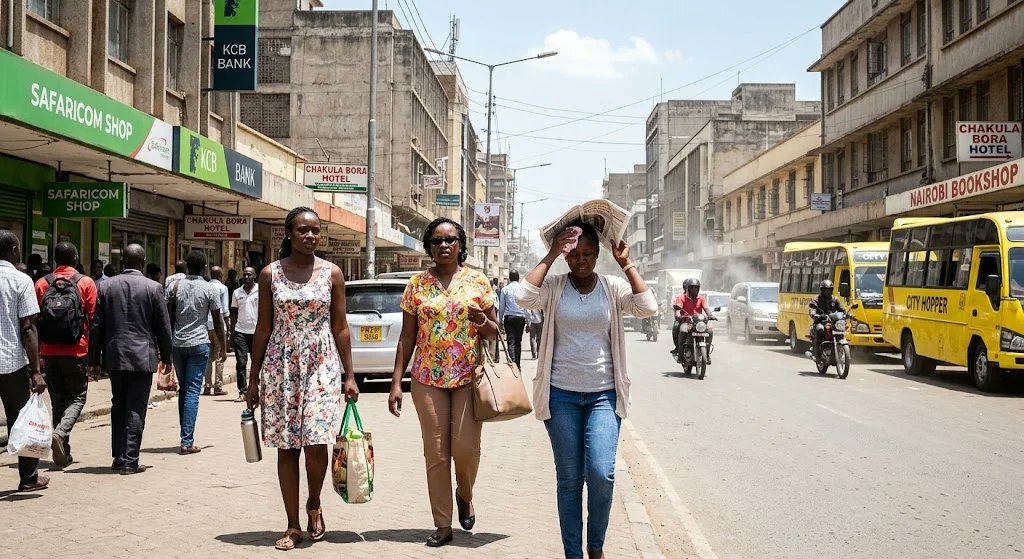
Nairobi—traditionally celebrated for its temperate climate, cool breezes, and highland weather—has increasingly seen soaring temperatures and prolonged hot spells. For a city where most residential homes and offices are built without built-in air conditioning, uncharacteristic heatwaves present unique challenges for daily life, productivity, and health.
Whether you are navigating packed public transport, working in high-density office blocks, or trying to sleep in an uninsulated apartment, here is a practical guide on how to stay cool, healthy, and safe during a Nairobi heatwave.
1. Prioritize Smart Hydration
When temperatures rise, your body loses fluids and vital electrolytes much faster than usual, even if you don’t feel noticeably sweaty.
- Drink Water Before You Feel Thirsty: Keep a reusable water bottle with you at all times. Aim for 2.5 to 3 liters daily during extreme heat.
- Replenish Electrolytes: Plain water is essential, but sweating strips your body of essential salts. Incorporate fresh coconut water (dafu), diluted fruit juices, or a squeeze of lemon with a pinch of salt into your water.
- Limit Dehydrating Beverages: Excessive coffee, energy drinks, and alcohol accelerate fluid loss. If you rely on morning tea or coffee, balance every cup with an extra glass of water.
2. Optimize Your Living Space Without A/C
Since air conditioning remains rare in Nairobi residences, managing airflow and solar heat gain is essential for keeping indoor temperatures manageable.
- The Daytime Blackout: Keep curtains, blinds, or drapes closed on windows that face direct sunlight during the hottest peak hours (typically between 11:00 AM and 4:00 PM). This simple barrier prevents radiant heat from warming indoor air.
- Create Cross-Ventilation: In the late evening and early morning when outside temperatures drop, open windows on opposite sides of your house to create a natural breeze and flush out trapped warm air.
- Damp Sheet Trick: Hang a damp towel or sheet near an open window or in front of an electric fan. As air passes through the wet fabric, evaporative cooling lowers the ambient room temperature.
- Cook Smart: Avoid using ovens, heavy stoves, or heat-generating appliances during peak daytime hours. Opt for fresh salads, fruits, or meals prepared quickly during cooler hours.
3. Beat the Heat on the Commute
Navigating Nairobi’s traffic jams inside a crowded Matatu during peak afternoon heat can easily cause heat exhaustion.
- Travel Off-Peak When Possible: Schedule non-essential errands, client meetings, or long commutes early in the morning or later in the evening when ambient temperatures drop.
- Dress in Natural, Light Fabrics: Swap synthetic materials like polyester for lightweight cotton, linen, or breathable bamboo. Wear loose-fitting, light-colored clothing that reflects heat rather than absorbing it.
- Carry Portable Shade: Always carry a broad-brimmed hat, sunglasses, or a compact umbrella to shield yourself from direct ultraviolet exposure when walking along unsheltered footpaths.
4. Protect Your Health and Recognize Heat Illness
Extreme heat places significant strain on the cardiovascular system and can cause conditions ranging from mild heat rash to life-threatening heat stroke.
Signs of Heat Exhaustion vs. Heat Stroke
| Condition | Symptoms | What to Do |
| Heat Exhaustion | Heavy sweating, dizziness, muscle cramps, headache, pale or clammy skin, nausea. | Move to a cool area, loosen clothing, sip cold water, apply damp cloths to skin. |
| Heat Stroke | High body temperature, hot/red skin, confusion, rapid pulse, fainting or loss of consciousness. | Emergency. Call for medical assistance immediately while cooling the person with cold water/ice packs on the neck and armpits. |
- Protect Vulnerable Groups: Check regularly on young children, elderly family members, neighbors, and pets, who are far more susceptible to rapid dehydration and heat stress.
5. Urban Cooling: Finding Green Spaces
Nairobi benefits from several large public parks and urban forests that offer significantly cooler microclimates than concrete-dominated neighborhoods like the CBD, Kilimani, or Eastlands.
- Seek Natural Shade: Take advantage of shaded public recreational spaces like Karura Forest, Jeevanjee Gardens, Uhuru Park, or City Park during peak afternoon hours. Shaded tree canopy environments can feel up to cooler than surrounding urban streets due to shade and evapotranspiration.