There is something particularly disturbing about a murder investigation that begins inside a family home. A place where an elderly woman should ordinarily feel safest, surrounded by people she knows, people she raised and people she trusts. Yet, sometimes, the most unsettling criminal investigations are not those involving strangers breaking into homes in the dead of night, but those in which detectives must reconstruct the movements and actions of people who already had access to the house.
On the night of Friday, October 30, 2026, an incident unfolded inside a residence in the affluent Loresho Ridge Estate in Nairobi. By the time the night was over, 86-year-old 𝗗𝗼𝗿𝗶𝘁𝗮 𝗟𝗮𝘀𝗶𝗻𝗱𝗲𝗿 𝗠𝗮𝗰𝗵𝗮𝗿𝗶𝗮 was dead, her body discovered lying in a pool of blood, with a deep cut wound to her neck.
Within hours, detectives from the Directorate of Criminal Investigations were examining a sequence of events involving her daughter, granddaughter, son and the granddaughter’s boyfriend. Four people would eventually find themselves in police custody, facing investigations into what authorities believe was a murder.
The circumstances surrounding Dorita’s final hours have since emerged through the account presented by investigators before the Kibera Law Courts on Monday, November 2, 2026. And the chronology is as disturbing as it is intriguing.
According to the police account, the events began with what appeared to be a domestic confrontation between Dorita and her granddaughter, 𝗧𝗵𝗮𝗻𝗱𝗶𝗲 𝗠𝗮𝗹𝗮𝗶𝗸𝗮 𝗚𝗶𝘁𝗮𝗼.
Thandie had reportedly been inside her grandmother’s residence with her boyfriend, 𝗜𝗺𝗺𝗮𝗻𝘂𝗲𝗹 𝗠𝘂𝗻𝘆𝗲𝗸𝗶, when the elderly woman discovered the two in what detectives described as a compromising situation.
Dorita was furious.
She reportedly confronted her granddaughter and demanded that she leave the house immediately. She also instructed her to surrender the keys she had been using to access the residence. Other young people who were present were similarly ordered to leave.
The confrontation was serious enough that Dorita contacted one of her sons, 𝗔𝗻𝘁𝗼𝗻𝘆 𝗠𝗮𝗰𝗵𝗮𝗿𝗶𝗮, seeking his assistance in removing Thandie from the property.
At this stage, the incident was essentially a disagreement between an elderly grandmother and her granddaughter over conduct inside the family home. Dorita had made her position clear. She wanted the young people out of her house, and she wanted her keys returned.
Thandie reportedly left the residence following the confrontation.
But she later returned.
And it is this return to the house that has become one of the most significant elements of the police investigation.
Detectives told the court that Thandie went back into the residence and remained inside with her grandmother for approximately one hour.
𝗢𝗻𝗲 𝗵𝗼𝘂𝗿.
An hour during which investigators are now attempting to establish precisely what transpired inside the house, what conversations took place, whether anyone else entered or left the premises and how the elderly woman sustained the injuries that ultimately claimed her life.
The next reported development was a desperate cry for help.
Thandie reportedly rushed outside the residence, screaming to people who were waiting nearby:
“She is bleeding!”
Inside the house, Dorita was lying in a pool of blood. She had sustained a deep wound to her neck. Some accounts described injuries towards the back of the neck, while others referred to additional deep cuts on her body.
Whatever the precise nature of those injuries, the scene that confronted those who entered the room was horrifying.
The 86-year-old woman was dead.
Senior Counsel 𝗣𝗵𝗶𝗹𝗶𝗽 𝗠𝘂𝗿𝗴𝗼𝗿, who represents the family, subsequently confirmed that there were visible injuries and a considerable amount of blood at the premises.
His description of the scene was brief but revealing.
“It didn’t look natural.”
Police officers from Gigiri Police Station responded to the incident, and the matter was taken up as a suspected homicide.
What followed was an investigation that quickly moved beyond the circumstances of Dorita’s death to the conduct and movements of the people who had been present at the residence that evening.
One of the accounts emerging from the investigation indicated that Dorita’s daughter, 𝗥𝗲𝗴𝗶𝗻𝗮 𝗪𝗮𝗺𝗯𝘂𝗶 𝗚𝗶𝘁𝗮𝘂, together with her brother Antony, had allegedly been found attempting to clean or interfere with the room where the body was discovered.
This detail became part of the wider circumstances being examined by investigators.
In any homicide investigation, the crime scene is central to reconstructing events. Blood patterns, fingerprints, DNA, the position of objects, possible weapons, clothing and other physical evidence can help detectives establish the sequence of events and determine whether accounts given by witnesses are consistent with what actually happened.
Investigators therefore have to examine not only the injuries sustained by Dorita but also the condition in which the room was found, the movements of those who entered it and whether anything at the scene had been disturbed.
By approximately 2 a.m. on Saturday, October 31, police had begun making arrests.
Initial reports indicated that several people were taken in for questioning, with the investigation eventually narrowing its focus to four individuals closely connected to the deceased.
Those detained were Regina, Dorita’s daughter; Thandie, her granddaughter; Immanuel, Thandie’s boyfriend; and Antony, Dorita’s son.
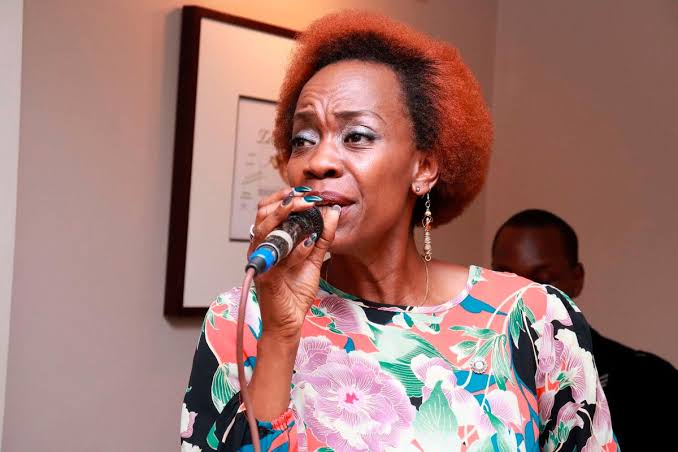
The arrest of Regina attracted particular public attention because she was once a familiar face on Kenyan television.
Popularly known as 𝗥𝗲𝗴𝗶𝗻𝗮 𝗥𝗲, she rose to prominence as a presenter and co-creator of the television quiz programme Who’s Smarter Now?, which aired between 1999 and 2006.
For many Kenyans who grew up watching local television during that period, Regina was a recognisable personality associated with entertainment and television production. She was also known for her work as an actress and media personality before gradually stepping away from the public spotlight.
Now, years later, her name has resurfaced in an entirely different context, following the violent death of her mother inside the family residence in Loresho.
On Monday, November 2, the four suspects were presented before Magistrate 𝗕𝗮𝗿𝗯𝗮𝗿𝗮 𝗔𝗸𝗶𝗻𝘆𝗶 at the Kibera Law Courts, where the Directorate of Criminal Investigations sought additional time to complete its inquiries.
Investigating officer 𝗣𝗖 𝗗𝗮𝘃𝗶𝗱 𝗡𝗷𝗼𝗿𝗼𝗴𝗲, attached to the DCI Homicide Department, outlined the preliminary sequence of events and explained why detectives required continued custody of the suspects.
The prosecution, represented by 𝗙𝗮𝗶𝘁𝗵 𝗠𝘂𝘀𝗼𝗺𝗮, requested 15 days.
The court heard that investigators were still analysing the circumstances surrounding Dorita’s death and needed to undertake several critical investigative procedures.
Among these was the examination of CCTV footage from the Loresho estate, which could help establish the movements of individuals entering and leaving the premises before and after the incident.
Detectives also intended to conduct forensic examinations, obtain fingerprints, analyse mobile phone call data records and record additional statements from witnesses.
A postmortem examination by a government pathologist was also pending. That examination is expected to provide important medical findings regarding the cause of death, the nature of the injuries and other details relevant to reconstructing the incident.
The investigating officer further informed the court that the suspects had indicated a willingness to provide information that could assist detectives in identifying other possible persons connected to the incident.
Police argued that releasing the suspects at that stage could compromise the investigation, including through possible interference with witnesses or evidence.
The defence opposed the request for prolonged detention, maintaining that the suspects had already recorded statements, surrendered their mobile phones and cooperated with investigators. Their lawyers also raised concerns regarding the protection of their constitutional rights.
After considering the submissions, Magistrate Akinyi authorised the continued detention of the four suspects at Gigiri Police Station for 10 days, rather than the 15 days requested by the prosecution.
The matter was scheduled for mention on November 12, 2026.
As the investigation continues, the central issue remains the reconstruction of Dorita’s final hour.
The police account places the beginning of the confrontation at the moment the elderly woman discovered her granddaughter and boyfriend inside the residence. It then describes Dorita demanding that they leave, her telephone call to her son, Thandie’s initial departure and her subsequent return to the house.
Approximately one hour later, Dorita was found bleeding from severe injuries.
For detectives, the challenge is to establish what happened during that interval and whether the available physical, digital and testimonial evidence can account for every significant movement inside the residence.
The CCTV recordings may establish who accessed the compound. Mobile phone records may assist in reconstructing communications between the individuals involved. Witness statements may clarify the chronology, while forensic examination of the room and the postmortem findings will provide evidence about the circumstances of the death.
There is also the question of motive.
Public discussion has already extended to the family’s circumstances, including speculation about inheritance and property interests in Loresho. However, investigators have not publicly established a motive, and the account presented in court has so far concentrated on the confrontation, the events preceding the discovery of the body and the evidence still being gathered.
𝗪𝗛𝗔𝗧 𝗠𝗔𝗞𝗘𝗦 𝗧𝗛𝗜𝗦 𝗖𝗔𝗦𝗘 𝗦𝗢 𝗗𝗜𝗦𝗧𝗨𝗥𝗕𝗜𝗡𝗚?
It is the sheer ordinariness of how the evening reportedly began, contrasted with the brutality of how it ended.
An elderly grandmother was inside her own home. She encountered conduct she disapproved of, confronted her granddaughter and demanded that the young people leave. She even called her son to assist her.
These are the kinds of disagreements that occur in families every day. Generational differences, arguments over household rules, disagreements about relationships and questions of respect for the authority of an elderly parent or grandparent.
But on this particular Friday night in Loresho, the confrontation was followed by a violent death.
And that is what makes the sequence of events so compelling from an investigative perspective.
Dorita was 86 years old. At that age, one would ordinarily expect her concerns to revolve around comfort, security, family and the dignity of spending her remaining years peacefully.
Instead, her life ended violently inside the very house where she should have enjoyed those comforts.
The people now at the centre of the investigation were not strangers whose identities detectives had to establish from scratch. They were individuals connected to the deceased through immediate family relationships and personal association.
That makes the task before investigators both sensitive and complex. They must separate family relationships, personal disagreements and the emotional circumstances of that evening from the actual evidence of what caused Dorita’s death.
The DCI must establish the precise sequence of events, identify the person or persons responsible for the fatal injuries, determine whether anyone assisted in the commission of the offence and examine the allegation of interference with the scene.
The findings will eventually be forwarded to the Office of the Director of Public Prosecutions for consideration and appropriate action.
For now, four people remain in custody as investigators continue piecing together the events of October 30.
An elderly woman is dead. A family is at the centre of a homicide investigation. And somewhere within the evidence being collected lies the explanation for what happened during Dorita Macharia’s final hours.
The most haunting part of this story remains the reported sequence between a grandmother demanding the return of her house keys and a granddaughter rushing outside screaming that she was bleeding.
𝗪𝗵𝗮𝘁 𝗲𝘅𝗮𝗰𝘁𝗹𝘆 𝗵𝗮𝗽𝗽𝗲𝗻𝗲𝗱 𝗶𝗻𝘀𝗶𝗱𝗲 𝘁𝗵𝗮𝘁 𝗵𝗼𝘂𝘀𝗲 𝗱𝘂𝗿𝗶𝗻𝗴 𝘁𝗵𝗼𝘀𝗲 𝗰𝗿𝗶𝘁𝗶𝗰𝗮𝗹 𝘀𝗶𝘅𝘁𝘆 𝗺𝗶𝗻𝘂𝘁𝗲𝘀?
That is the question investigators must now answer.
And for an 86-year-old woman whose life ended so violently in her own home, it is a question that deserves a thorough, professional and conclusive investigation.
May Dorita Lasinder Macharia rest in eternal peace.