“When should I go?” is usually the very first question anyone planning a Maasai Mara safari asks — and it’s also the question with the most trade-offs hiding inside it. Go during the famous migration months and you’ll pay peak prices and share the riverbank with dozens of other vehicles. Go in the quiet season and you’ll have the plains nearly to yourself, at a fraction of the cost, but miss the river crossings entirely. Here’s how to actually decide.
The Quick Answer
**July through October** is peak season — the wildebeest migration is in the Mara, river crossings are possible, and it’s the classic postcard version of a Kenyan safari. **January and February** offer excellent wildlife viewing (predators, resident game, calving season on the Tanzanian side) with noticeably fewer crowds and lower prices. **March to May** is the quiet, cheap “green season” — some rain, thinner crowds, and a completely different, lusher landscape.
Month-by-Month Breakdown
**January-February — Dry, Warm, Fewer Crowds**
The short rains have ended and the Mara is dry and golden. This window sits just before the bigger crowds of mid-year, making it a strong pick if you want solid predator sightings — the resident lion prides, cheetahs, and leopards are here year-round, migration or not — without competing with dozens of other vehicles at every sighting. Just across the border, Tanzania’s Ndutu area hosts wildebeest calving season during these months, so if your itinerary crosses into Tanzania too, this timing does double duty.
**March-May — The Long Rains**
This is the quietest and cheapest stretch of the year. Expect afternoon downpours, muddier roads (some remote conservancy tracks can become difficult to access), and noticeably thinner crowds at every camp and lodge. Landscapes turn a dramatic, lush green that photographs beautifully and looks nothing like the dusty golden Mara most people picture. Some smaller camps close temporarily during the wettest weeks, so check availability carefully if you’re set on this window.
**June — The Turning Point**
Rains taper off, grass is still green from the wet season, and the first wildebeest herds typically begin arriving from the Serengeti later in the month. Prices haven’t hit peak-season levels yet, making this a genuine sweet spot for travelers who want migration-adjacent timing without paying July-October rates.
**July-October — Peak Season and the Great Migration**
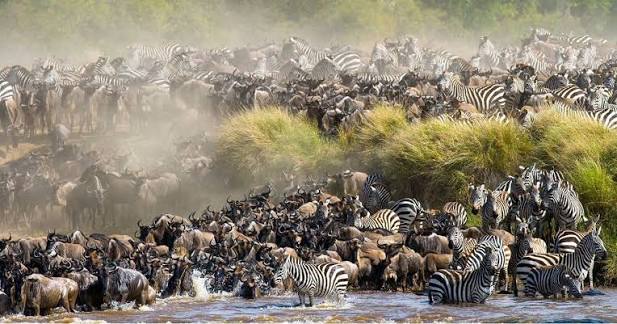
This is what most people picture when they imagine a Kenyan safari: massive wildebeest and zebra herds moving across the Mara, and the dramatic Mara River crossings that nature documentaries are built around. River crossings cluster most heavily around August and September, though the exact timing shifts year to year based on rainfall patterns further south in the Serengeti — there’s no guaranteed date, and even tour operators can only give you probability, not certainty. This is also when the Mara sees its highest visitor numbers and steepest prices, since it overlaps with Northern Hemisphere summer holidays.
**November-December — Short Rains and Shoulder Season**
Brief afternoon showers return, but they’re generally lighter and shorter than the March-May long rains, so game viewing stays fairly reliable. Crowds and prices drop noticeably compared to peak season, and the landscape starts greening up again after the dry months. December sees a small crowd bump around the Christmas/New Year holiday period specifically, so booking ahead still matters if you’re traveling during that particular window.
Weighing Your Priorities
– **Want to see the river crossings and have flexible dates?** Aim for August-September, and build in extra days since crossings can’t be scheduled to order.
– **Want strong wildlife viewing without peak crowds?** January-February is the better-kept secret of the two dry seasons.
– **Traveling on a tighter budget?** March-May and November offer the steepest discounts, sometimes 30-50% below peak rates.
– **Photographing landscapes, not just wildlife?** The green season (March-May, November) produces dramatically different, lusher imagery than the classic dry-season shots most people have seen before.
– **Combining with Tanzania’s Serengeti or Rwanda/Uganda gorilla trekking?** Time your Mara visit around the migration’s location, since it moves between Kenya and Tanzania seasonally, and check our [visa guide](/travel/kenya-visa-eta-requirements-2026) if a multi-country itinerary means you need the East African Tourist Visa instead of a single-country eTA.
Booking Timelines by Season
– **Peak season (July-October, January-February):** Book premium camps 6-12 months ahead — the best-located tented camps sell out well in advance.
– **Shoulder months (June, November, early December):** 4-6 months ahead is usually sufficient.
– **Green season (March-May):** Often bookable just a few weeks to a couple of months out, since demand is lowest.
Don’t Forget the Practical Side
Whatever month you choose, remember that your travel dates also affect two things we’ve covered elsewhere: park entry costs, which have varied by season and remain [somewhat unsettled due to an ongoing fee dispute](/travel/kenya-safari-park-fees-2026), and your entry paperwork, since your [eTA needs to be approved before you fly](/travel/kenya-visa-eta-requirements-2026) regardless of when you’re traveling. It’s also worth a quick read of [current safety conditions](/travel/is-kenya-safe-for-tourists-2026) as part of your planning, no matter which season you pick.
Bottom Line
There’s no single “best” month for the Maasai Mara — there’s only the best month for what you personally want out of the trip. If the river-crossing spectacle is non-negotiable, plan around August-September and accept the crowds and cost that come with it. If you’d rather have a quieter, more personal safari experience for less money, the shoulder and green seasons deliver excellent wildlife viewing that most first-time visitors don’t realize is on the table.
For everything else you need to plan this trip, see our [complete Kenya Safari Travel Guide 2026](/travel/kenya-safari-travel-guide-2026).