
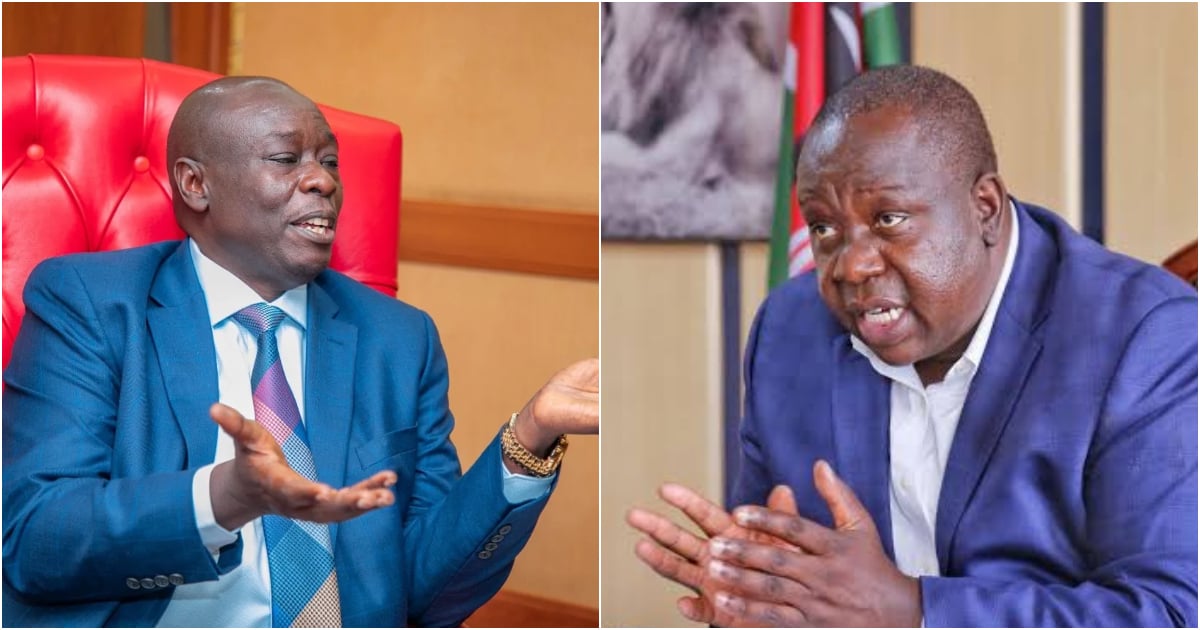
With Uhuru’s bombshell endorsement, Rigathi Gachagua’s political comeback and a Ruto administration under pressure, Kenya’s most anticipated election is no longer a distant event—it is happening right now.
Kenya’s next general election is scheduled for August 2027. By the calendar, it is fourteen months away. By every other measure, it has already started. The political temperature in Nairobi in the opening days of May 2026 is running hotter than it has at any point since the last vote was counted. A remarkable cluster of developments — a Senate motion targeting a former president, a surprise endorsement from Uhuru Kenyatta, a public feud between ruling coalition allies, and the steady rise of new political formations — have converged to make one thing crystal clear: the battle for Kenya’s top office is now fully engaged.
THE KENYATTA ENDORSEMENT AND WHAT IT MEANS
When Uhuru Kenyatta called into a Jubilee Party gathering in Narok last week and declared his support for Fred Matiang’i’s presidential ambitions, the reaction in political circles was electric. Matiang’i, a former Cabinet Secretary for Interior who built a formidable reputation as one of the most effective — and feared — ministers in recent Kenyan history, had been widely expected to enter the 2027 race. Uhuru’s public backing transforms his candidacy from a credible prospect into a serious threat. The fourth president commands significant political capital in Central Kenya, in the broader Kikuyu vote base, and among moderate urban voters who are growing fatigued with the turbulence of the Ruto administration.
For President Ruto, the Kenyatta endorsement represents both a political and personal challenge. The two men were once the most powerful political partnership in Kenya—they governed together for a decade. Their falling-out has been one of the defining storylines of contemporary Kenyan politics. The spectacle of Uhuru publicly campaigning for Ruto’s potential 2027 opponent while continuing to receive a state-funded retirement package is the kind of narrative that generates both genuine public anger within Kenya Kwanza and enormous organic media attention.
“Kenyatta is retired, he is a member of Jubilee, and he is playing his role as a member and the leader of Jubilee. Leave him alone.” — Fred Matiang’i
THE RETURN OF RIGATHI GACHAGUA
Meanwhile, former Deputy President Rigathi Gachagua—who was dramatically impeached by Parliament in 2024—continues his remarkable political resurrection. Having launched a new political vehicle and begun a series of high-profile county tours, Gachagua has positioned himself as the champion of Mount Kenya grievances against the Ruto administration, arguing that the region has been marginalised since his removal from power. His ability to draw large and enthusiastic crowds has surprised many who believed his political career was effectively finished after the impeachment. As 2027 approaches, Gachagua’s movement represents a potential spoiler that could complicate the arithmetic for any candidate hoping to consolidate Central Kenya’s vote.
RUTO’S VULNERABILITIES AND THE COST-OF-LIVING CRISIS
Incumbent presidents running for re-election in Kenya face one consistent test above all others: the economic mood of the country. On that measure, President Ruto faces genuinely difficult headwinds. The cost of living remains a defining preoccupation for ordinary Kenyan households. Fuel prices, food costs, electricity bills, and school fees have all remained a source of public complaint throughout the administration’s first term. While the government can point to infrastructure projects, digital economy initiatives, and moments of diplomatic success, the gap between policy announcements and lived reality for millions of Kenyans in Mathare, Kibera, Kisumu, and Eldoret remains a political liability that opposition figures are keen to exploit.
The next fourteen months will determine whether Ruto can convert his incumbency advantage into a commanding re-election mandate or whether the combination of Matiang’i’s candidacy, Gachagua’s resurgence, and a restless electorate opens the door to a change of guard. Kenya’s political journalists and analysts agree on one thing: it will not be boring. It never is.
READ MORE: