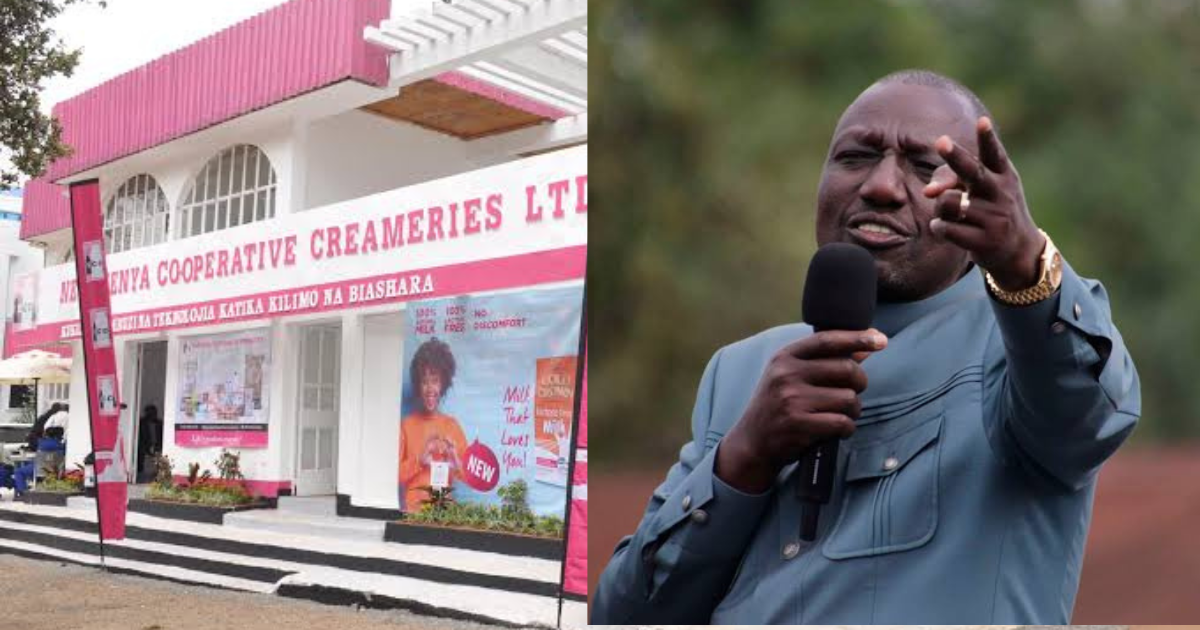
President William Ruto’s administration has begun a strategic plan targeting the economic power of the Kikuyu community after the region signaled its rejection of his 2027 re-election bid.
In 2022, President William Ruto secured his historic victory after the Kikuyu community voted for him en masse to make him the 5th President of the Republic of Kenya. In fact, roughly 47 percent of the total votes that propelled the “Son of Sugoi” to State House came from the rugged hamlets of the Mt. Kenya region.
However, in 2024, the region broke ranks with the President after he backed the impeachment of his Deputy President, Rigathi Gachagua. Gachagua enjoyed a massive following in Mt. Kenya, and political observers consider his removal the single worst mistake the President has made—sparking intense anger, resentment, and open rebellion across the region.
Now, facing the reality of becoming a one-term president in 2027, Ruto has begun punishing Mt. Kenya residents by shutting down New Kenya Co-operative Creameries (KCC) facilities across the region—dismantling the primary source of income for thousands of local dairy farmers.
A closer look reveals that the administration has shut down 9 KCC depots and factories across Mt. Kenya and central hubs:
List of KCC Depots & Factories Closed by the Ruto Administration:
- Nyahururu Factory – Closed
- Nanyuki Sales Depot – Closed
- Naivasha Plant – Closed
- Kiganjo Factory – Closed
- Kangema Plant – Closed
- Githumu Plant – Closed
- Miritini Factory – Closed
- Nairobi Sales Depot – Closed
- Dandora Sales Depot – Closed
Facilities That Remain Open in the President’s Backyard:
While Mt. Kenya facilities are shut down, factories and depots in the Head of State’s political stronghold remain fully operational:
- Eldoret Factory
- Sotik Factory
- Kitale Factory
- Kapsabet Plant
- Kilgoris Plant
- Ainabkoi Plant
- Iten Plant
- Lesos Plant
- Eldama Ravine Plant
- Molo Plant
- Nakuru Plant
- Kisumu Plant
- Kericho Depot